You follow your training plan to the letter, you sleep well, you manage your stress, and yet, as soon as you swallow a second gel in a race, your stomach reminds you who’s really in charge. Nausea, cramps or the urgent need for a bush are not inevitable. They reflect a gut that has never been trained to absorb 60, 70 or 90 g of carbohydrate per hour on the move. The good news: the gut adapts. That’s what gut training is all about, a strategy studied by research and open to any marathon runner or sportive rider.
In short: above 60 g of carbohydrate per hour, your gut needs training. The plan: 6 weeks, 2 to 3 sessions a week, stepping up from 40-50 g/h to 75-90 g/h, with a glucose + fructose mix from 60 g/h. If nausea, cramps or diarrhoea appear, go back to the previous step. And 90 g/h is not compulsory: your right number is the one you tolerate.
Why your gut needs training too
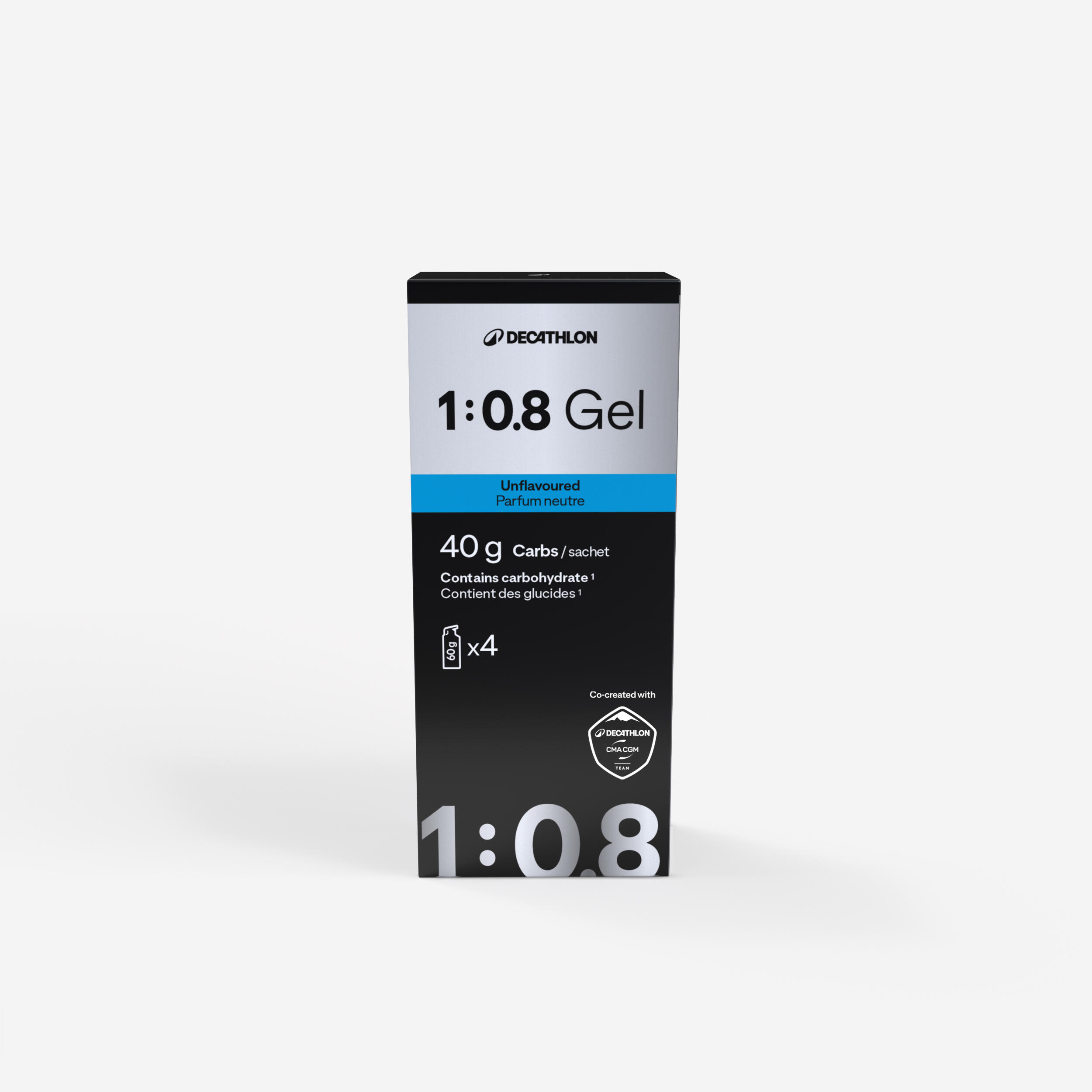
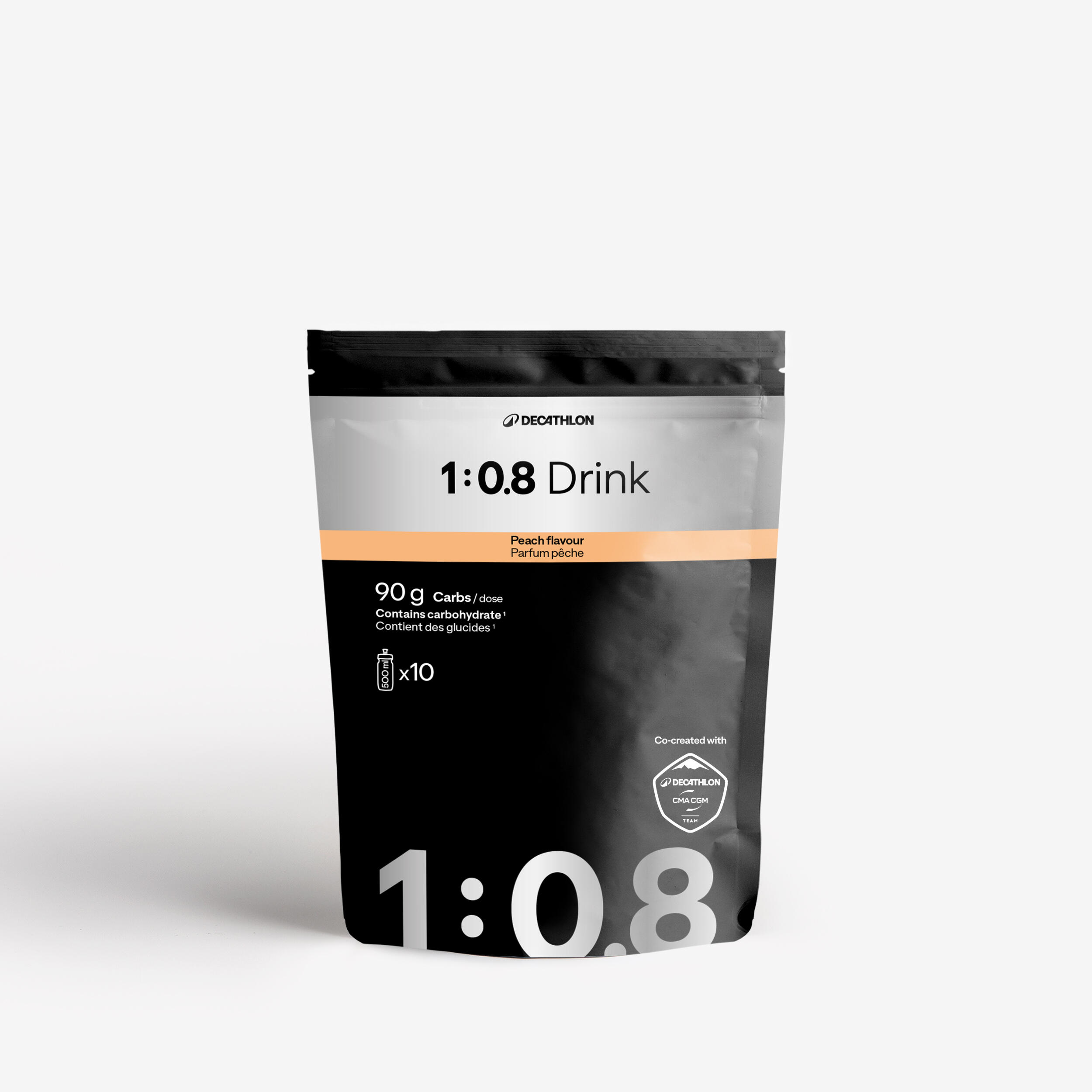
Carbohydrate absorption in the gut relies on transporters: mainly SGLT1 for glucose and GLUT5 for fructose. Each has a limited capacity. The glucose transporter saturates at around 60 g/h: beyond that, adding fructose opens a second absorption route. That’s why products designed for high intakes combine glucose (or maltodextrin) and fructose, usually in a 2:1 ratio, or even 1:0.8 for the highest intakes.
Carbohydrate that isn’t absorbed stays in the gut and ferments: that’s what causes bloating, cramps and diarrhoea. Gut training means regularly exposing your gut to high intakes during exercise so it can adapt. In his landmark review, Jeukendrup (2017, Sports Medicine) explains that the gut responds to this training and that gastrointestinal symptoms in races can be reduced as a result.
A systematic review by Martinez et al. (2023, Sports Medicine) pulled together the available studies: two weeks of repeated carbohydrate intake during exercise reduced gut discomfort by 47% on average, and carbohydrate malabsorption by 45 to 54%. The evidence is still limited, though (only 8 studies), and results vary a lot between athletes. King et al. (2022, Nutrients) also found in highly trained athletes that pushing intake well beyond the guidelines had only minor effects. The takeaway: training your gut is worthwhile, but the aim is to tolerate what you need, not to swallow ever more.
Ograal adapts to your gut-training sessions
A gut-training plan only makes sense if your nutrition around your sessions keeps up. In Ograal, the fueling for each session (carbohydrate per hour, bottles, gels) is calculated and then counted in your day’s total: the meals around the ride take it into account. If you connect Strava or Nolio, the session’s actual expenditure replaces the estimate and the meals that follow are recalculated. On the day you test 70 g/h on a long ride, your other meals adjust, with no sums for you to redo. For details, see How our plans are calculated.
The principles of the progressive plan
Gut training relies on three combined levers:
- Frequency of exposure: take carbohydrate during most of your long or moderate-intensity sessions, not just before races.
- Gradual doses: increase intake in steps of 10 to 15 g/h every two weeks, to give your gut time to adapt.
- Type of carbohydrate: above 60 g/h, use products that combine glucose (or maltodextrin) and fructose, in a 2:1 or 1:0.8 ratio, to use both absorption routes.
The aim isn’t to force down as much as possible from week 1. It’s to get your digestive system to accept high intakes without warning signs. Consistency matters more than intensity.
6-week plan: the steps
Here’s the structure in three steps. Apply each step to your long sessions and moderate-intensity rides (zones 2-3). Short or very hard sessions are not the time to test new intakes.
| Weeks | Goal | Carbohydrate per hour | Intake frequency |
|---|---|---|---|
| 1-2 | Getting started | 40 to 50 g/h | every 30 to 35 min |
| 3-4 | Building up | 55 to 70 g/h | every 25 to 30 min |
| 5-6 | Consolidating | 75 to 90 g/h | every 20 to 25 min |
Weeks 1-2: getting started (40-50 g/h)
Start with 40 to 50 g of carbohydrate per hour on your long rides. The aim is to get used to eating on the move, not to go to the maximum. Take a gel or a few sips of energy drink every 30 to 35 minutes. Rate your gut comfort at the end of each session: bloating, nausea, stomach discomfort. If all goes well after 4 to 5 sessions, move on to the next step.
Weeks 3-4: building up (55-70 g/h)
Go up to 55 to 70 g/h. This is where you start using both transporters at once: choose mixed glucose + fructose sources (“2:1” gels, maltodextrin + fructose drinks). Shorten the gap between intakes to 25-30 minutes. A slight increase in gut sensations at the start of the step is normal and usually settles within 2 to 3 sessions. If symptoms are significant, stay one more week at the previous step.
Weeks 5-6: consolidating (75-90 g/h)
The final step targets 75 to 90 g/h, only on long rides or race simulations. At this dose, tolerance is individual: some reach 90 g/h with no trouble, others level off at 75-80 g/h. What matters is finding your ceiling, not hitting a theoretical number. Once you’ve found it, keep fueling regularly on your long sessions: the adaptation fades if your gut is no longer challenged.
Tolerance markers to watch
Good gut training is assessed at every session. Here are the signs to track:
- Stomach comfort: no nausea, reflux or heaviness in the 30 minutes after an intake.
- Bowel comfort: no urgency or lower cramps during exercise or in the hour after.
- How it feels: rate your comfort from 1 to 10 at the end of each session. Visible progress over 2 weeks shows good adaptation.
- Performance maintained: intake should support your effort, not hold you back. If your stomach slows you down, the dose or the type needs rethinking.
Avoid trying new brands or products during the consolidation weeks. Testing belongs in the earlier steps, where the risks are lower.
Warning signs: when to go back a step
Slight discomfort at the start of a step is normal. However, go back to the previous step for a week if, over two sessions in a row, you notice:
- nausea or regurgitation after intakes;
- abdominal cramps or bloating that force you to slow down;
- urgency or diarrhoea during or just after exercise.
If these symptoms persist even at low doses, or come with blood in your stools, severe pain or vomiting, stop the protocol and see a doctor. People sensitive to FODMAPs (which include fructose) should introduce fructose more slowly, ideally with support from a dietitian.
Practical tips for every intake
- Split it up: an intake every 20 to 30 minutes works better than a big dose every hour.
- Drink with your gels: a concentrated gel taken without water stays in your stomach longer. Take a few sips of water with each gel, unless it’s an “isotonic” gel that’s already diluted.
- Start early: first intake after about 20 minutes of exercise, without waiting until you’re hungry.
- Limit fibre, fat and protein during exercise and in the meal before: they slow digestion.
- Nothing new on race day: every product you use in a race should have been tested in training, at the same dose.
Adjusting to intensity
Exercise intensity changes gut tolerance. The faster you go, the more blood flow is diverted from your gut to your muscles. That’s why:
- At low intensity (zones 1-2), you can test higher doses and new types of carbohydrate.
- At moderate intensity (zone 3), stick to your usual steps. This is the main gut-training zone.
- At high intensity (zones 4-5), cut back on solids and favour drinks or very runny gels. It’s not the time to increase quantities.
In a race, marathon or sportive, you’ll probably be in a sustained zone 3-4. That’s why training your gut in zones 2-3 is essential: it prepares you to tolerate your intake even when your body is under pressure.
Frequency and fitting it into your training
For the adaptation to happen, gut training needs to be done at least 2 to 3 times a week, on sessions of at least 45 minutes. One long ride a week isn’t enough. Include carbohydrate intake during:
- your long rides and runs (the obvious one);
- your threshold or tempo sessions, adjusting the dose to the intensity;
- your back-to-back weekend sessions, if you do them.
On the other hand, there’s no point taking gels during a short 30-minute interval session or a recovery ride. Adaptation comes from consistency on long sessions, not from how much you swallow in one go.
What the research says
The science of gut training is still young. Jeukendrup (2017) laid the foundations: the gut adapts to repeated exposure, just as muscle adapts to progressive load. The systematic review by Martinez et al. (2023) confirms a reduction in gut discomfort and malabsorption after two weeks of repeated intake, with no measurable effect on how fast the stomach empties. King et al. (2022) are a reminder that going beyond the guidelines doesn’t necessarily bring more.
The message is clear: gut training is part of preparing for long events, just like long rides. But the target remains individual.
Start now, not two weeks before the race
Six weeks is the minimum to see a real adaptation. If your marathon or sportive is three months away, you have plenty of time. If it’s six weeks away, start right now and focus on the first two steps: they already bring a clear gain compared with no gut preparation at all.
So you’re not guessing, let Ograal calculate your fueling and adjust your meals around every session. Create your free Ograal account.
Go further
- Cycling Fueling for Long Rides: What to Eat and When
- Marathon 4h Fueling Plan: How Often Should You Take Gels?
- Gels vs Energy Drink: What to Choose for Your Marathon?
- Stomach Issues with Gels in a Marathon: 5 Causes + Solutions
- Trail 3h Fueling Plan for a Sensitive Stomach (Gels, Puree, Drinks)
- Trail Running Nutrition: What to Eat Before, During and After
- Homemade Isotonic Drink: Recipes for Cycling and Trail Running
- Train Low, Race High: The Carbohydrate Periodisation Strategy That Improves Running Economy
- Courtney Dauwalter and Isomaltulose: The Slow Carb Changing Ultra-Endurance Fueling
- Kat Matthews and the Glucose Sensor: The New Tool for Endurance Triathletes
- Blandine L’Hirondel: The Trail Nutrition Strategy Behind Her UTMB 2026 Victory
Sources
- Jeukendrup, A. (2017). Training the Gut for Athletes. Sports Medicine, 47(Suppl 1), 101-110. DOI: 10.1007/s40279-017-0690-6
- King, A. J., et al. (2022). Short-Term Very High Carbohydrate Diet and Gut-Training Have Minor Effects on Gastrointestinal Status and Performance in Highly Trained Endurance Athletes. Nutrients, 14(9), 1929. DOI: 10.3390/nu14091929
- Martinez, I. G., Mika, A. S., Biesiekierski, J. R., Costa, R. J. S. (2023). The Effect of Gut-Training and Feeding-Challenge on Markers of Gastrointestinal Status in Response to Endurance Exercise: A Systematic Literature Review. Sports Medicine, 53, 1175-1200. DOI: 10.1007/s40279-023-01841-0