I see it in my consultations at Ograal and at race start lines: trail nutrition remains the Achilles heel of many runners. Athletes spend months training and obsess over every gram of kit weight, yet give no serious thought to what goes in the flask or the pack. The result: hitting the wall at halfway, nausea at the aid station, or a recovery that drags on for days. I wrote this article for you — the trail runner — whether you’re covering 20 km or 100 miles. The principles don’t change; it’s only the scaling that differs.
Short trail, long trail, ultra: three different nutritional disciplines
Your body does not face the same challenge running a 20 km in two hours as it does spending the night on the trails. On a short, high-intensity trail race, muscle glycogen is the primary fuel. On an ultra, fat oxidation plays a growing role, but carbohydrates remain essential for maintaining pace on climbs and beyond 60 minutes of sustained effort. Glycogen stores are typically depleted after 60 to 90 minutes of intense effort — that is the limiting factor that nutrition must compensate for as soon as you exceed that duration.
On ultra distances, an additional challenge emerges: muscle preservation. The repeated impact of trail running degrades muscle fibres, and without smart fuelling you amplify that breakdown. Muscle preservation for endurance athletes also depends on fractional protein intake — BCAAs or complete proteins — particularly beyond six hours of racing. It is also why triathlon race week nutrition shares so many fundamentals with trail nutrition: the same glycogen demands and the same digestive constraints under effort.
Before the start: loading without weighing yourself down
Pre-competition nutrition starts well before race morning. From D-7 to D-5, you can slightly reduce carbohydrate intake to create a muscular “demand,” then progressively increase from D-4 to D-2 to saturate glycogen stores — the classic glycogen supercompensation protocol. The day before, food intake returns to normal quantities: no need to stuff yourself, but avoid ending the day in a deficit.
The pre-race meal (3 to 4 hours before the start) should be rich in complex carbohydrates — rice, oats, bread — with a modest amount of lean protein and very little fat or fibre. This is the “three-P rule” I repeat to my athletes: Not greasy, Not fibrous, Not experimental. Race day is not the time to try a new food.
30 minutes before the start, a small, easily digestible carbohydrate snack (applesauce pouch, ripe banana, energy gel) can make sense on longer formats. For a short trail race, hydration alone is often sufficient.
During the effort: the carbohydrate-per-hour rule
This is the cornerstone of your race nutrition plan. The science is clear:
- Under 1 hour: water is enough; no carbohydrate intake is needed.
- 1 to 2h30 of effort: aim for 30 to 45 g of carbohydrates per hour.
- 2h30 to 3h30: increase to 45 to 60 g per hour.
- Beyond 3 hours: you can push up to 90 g/h, provided you have trained your gut.
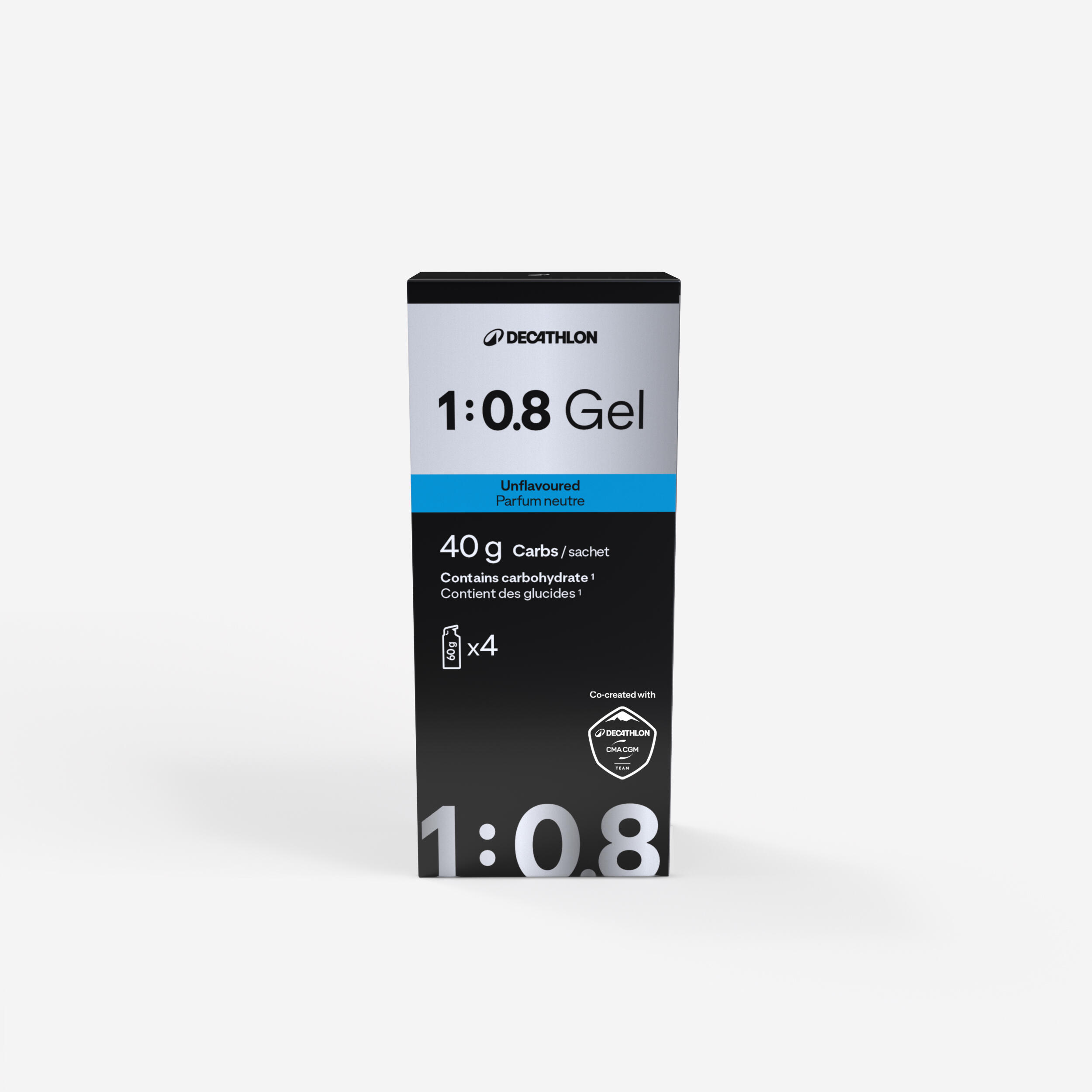
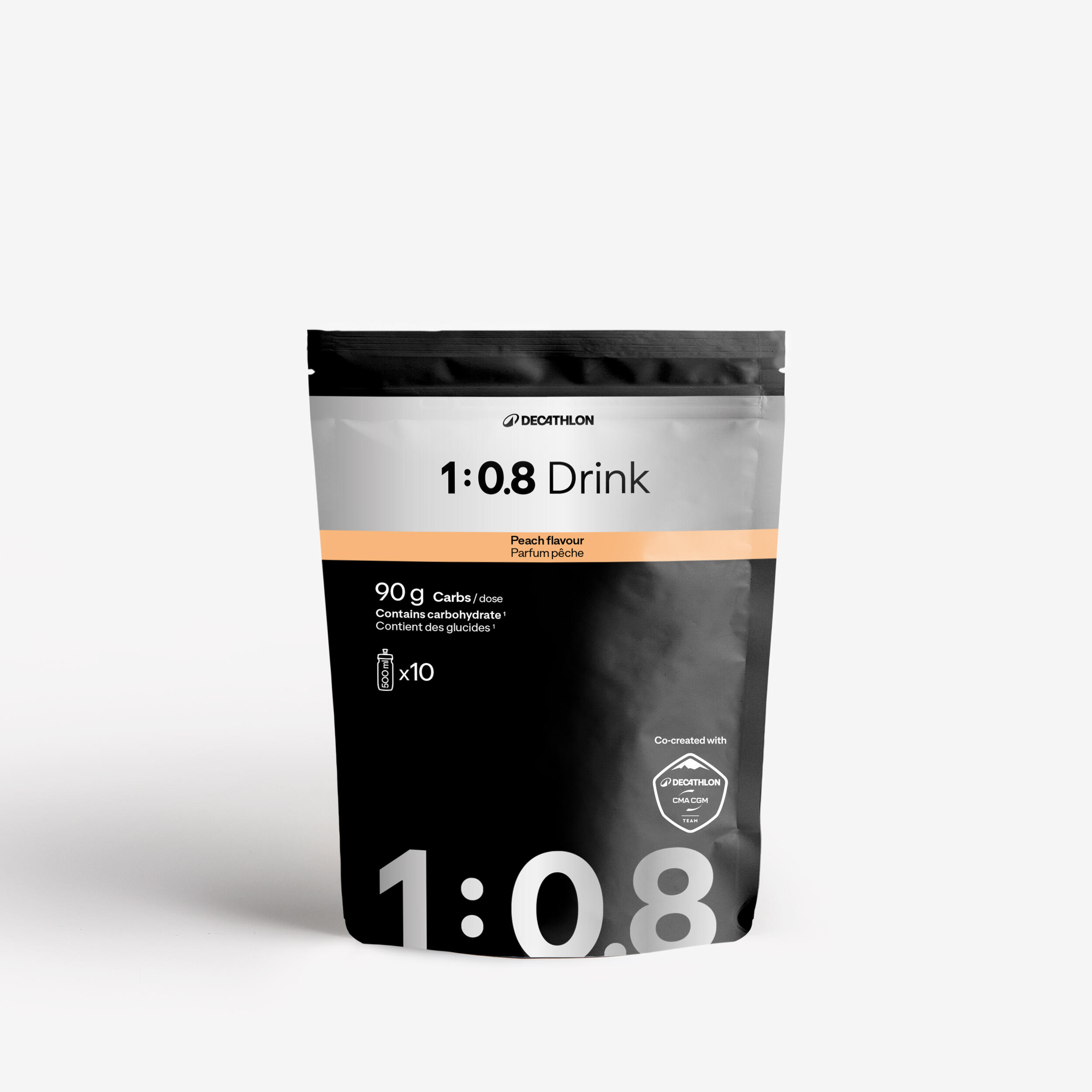
The 90 g/h ceiling is not arbitrary: it corresponds to maximum intestinal absorption capacity. The small intestine has two distinct transporters — SGLT1 for glucose and GLUT5 for fructose. By combining both sources (for example, a glucose gel together with a fructose drink), you double the absorption pathway and prevent the saturation that causes nausea. A glucose:fructose ratio of approximately 1:0.8 is now recognised as optimal for intakes close to 90 g/h.
Start fuelling early — within 20 to 30 minutes of the race start — and maintain a regular intake every 20 to 30 minutes. Waiting until you feel hungry means you are already behind. On the trail, the stomach receives less blood flow than at rest; small, fractional intakes are better tolerated than one large feed all at once.
Gels, bars, solid food: what to choose based on duration
On a short trail (under 2 hours), energy gels are king: maximum digestibility, quick to take, immediate energy. Take them with water, not fruit juice.
On a medium-distance race (2 to 5 hours), you start craving texture and salt. Energy bars and applesauce pouches come into play. A few cheese crackers or half a soft-bread sandwich at an aid station does the job and relieves sweet-food fatigue.
On an ultra (beyond 8 hours), palatability becomes a major issue: sweet foods become increasingly hard to stomach and nausea is a constant threat. Introduce savoury solid food — puffed rice, soup, boiled potato — at aid stations. These foods also provide natural sodium. For very long distances, a small dose of protein every 2 to 3 hours (a protein bar or a small piece of cheese) helps limit muscle breakdown.
The golden rule: train with everything you plan to eat during the race. Your gut adapts, but only if you habituate it progressively — this is the “gut training” that every ultra-trail runner must incorporate into their preparation.
Hydration and sodium: the other key to performance
A dehydration level of just 2% of body weight is enough to significantly impair physical and cognitive performance — elevated heart rate, heavy legs, loss of concentration. Trail hydration cannot be improvised on race day.
The basic strategy: drink 150 to 250 ml every 15 to 20 minutes, even without feeling thirsty. On longer formats in high heat, anticipate even more — I have detailed the specific challenges in the article on cyclist hydration in summer heat, which applies directly to summer trail running.
Sodium plays a genuine role in fluid balance: it promotes water retention in cells and helps maintain plasma pressure. On short efforts it is not essential. On multi-hour ultras, incorporating electrolytes (sodium, potassium, magnesium) via your drink or electrolyte tablets prevents imbalances. However, be cautious about excess: studies on ultramarathon runners show that hyponatraemia (too little sodium) is less common than widely believed, and many runners overestimate their salt requirements.
For cramp prevention, sodium is only part of the equation. Muscle fatigue, effort intensity, and training level remain the primary causes. A widely discussed remedy on the trails is pickle juice for cramps in endurance sport — its effectiveness is real and documented, not because of its sodium content, but through a reflex action on the nervous system.
After the trail: the first minutes matter
The post-effort metabolic window is real: the 30 to 45 minutes immediately following the finish are ideal for initiating recovery. Your body is particularly receptive to glucose — GLUT4 transporters remain active and glycogen is replenished far more rapidly than later, at rest.
In practice: at the finish line, take a snack combining fast carbohydrates and protein (a yoghurt with a fruit pouch, a recovery drink, bread with ham). Within the following hour, aim for a proper meal with starchy foods, a protein source, and vegetables. Water rich in bicarbonates and sodium helps buffer muscle acidity. I have elaborated on all the details of this strategy in the article on post-ride nutrition recovery, which applies equally well to trail running as to cycling.
Do not overlook sleep and rehydration in the hours that follow: if you lost 2 kg during the race, you will need approximately 3 litres of fluid spread over 2 to 4 hours to restore your fluid balance. Clear urine is your best indicator.
Ograal calculates your plan based on your actual duration
What I have described here are principles. But trail nutrition is deeply individual: your body weight, your training level, the heat, the elevation gain, your digestive tolerance — all of these change the equation.
This is exactly why Ograal was built. The app integrates your actual effort duration, your race conditions, and your physiological profile to calculate a personalised nutrition plan — carbohydrates per hour, product type, intake frequency, tailored hydration. No more rough calculations: you know exactly what to eat, when, and in what relative quantities.
Ready to build your plan for your next trail? Calculate your nutrition strategy on Ograal — and stop letting nutrition decide your race performance for you.