Isomaltulose and Palatinose: The Slow Carb Reshaping Ultra-Endurance Fueling
On a 20-hour-plus ultra, the question isn’t "how many carbs am I taking in" anymore — it’s "will my blood glucose hold." You’ve probably felt that wall around hour 15, legs turning to lead right after you just swallowed a gel meant to bring you back. The problem is often not the amount of carbohydrate — it’s how fast it gets absorbed. A glucose spike followed by a crash, repeated for hours, is behind a good chunk of late-race "walls" in ultra-distance racing.
That’s exactly the terrain covered by the carb-loading and long-distance fueling module from Ograal: it helps you plan your carbohydrate strategy hour by hour for races over 5 hours, factoring in the glycaemic index of every carb source you carry — not just total grams per hour.
Definition: isomaltulose (marketed as Palatinose™ by BENEO) is a natural disaccharide extracted from sugar beet, with a very low glycaemic index (32, versus 100-105 for pure glucose or maltodextrin). Its distinctive chemical bond (alpha-1,6-glycosidic) slows digestion and intestinal absorption, producing a gradual energy release instead of a glucose spike followed by a crash.
70-140 mg/dL: the target glycaemic window for ultra-endurance athletes
On efforts lasting more than 5 hours, the goal isn’t to maximise blood glucose — it’s to keep it stable within a target window, generally between 70 and 140 mg/dL. Below that, you enter functional hypoglycaemia: reduced alertness, heavy legs, nausea. Above it, you waste insulin response and disrupt fat oxidation, your main fuel reserve on an ultra.
The reference study on this topic comes from the Swansea University team: Hamilton RA, Xia R, Nicholas C, Churm R, McCarthy OM, Bracken RM (2025, European Journal of Sport Science) followed 9 ultra-endurance athletes over two 28-day periods, using continuous glucose monitoring (CGM), comparing an isomaltulose-based drink (GI 32) with a maltodextrin drink (GI 100).
What the CGM data shows
Athletes on isomaltulose spent more time within the 70-140 mg/dL target window, with reduced glycaemic variability (coefficient of variation of 16% versus 18% for maltodextrin, p=0.0003) and time spent below the low threshold nearly halved (2% versus 4%, p=0.006). In practice: fewer spikes, fewer crashes, fewer hypoglycaemic episodes over time.
4 weeks of isomaltulose: what does the 2025 research data show?
The protocol wasn’t just a one-off intake test. Participants followed a carbohydrate-rich diet for 28 consecutive days, with isomaltulose or maltodextrin built around training sessions. Result: the metabolic benefits aren’t just a race-day effect — they build up with repetition, a genuine metabolic training effect.
According to BENEO, which co-funded the study, fat oxidation was significantly higher with isomaltulose, both in acute testing and across the full 4-week period — without any loss of performance capacity compared to maltodextrin. That’s the key point: you don’t sacrifice speed, you gain stability and better access to fat as fuel.
This observation confirms earlier work: Oosthuyse et al. (2015, Int J Sport Nutr Exerc Metab) had already shown that isomaltulose increases fat oxidation during exercise compared to a fructose-maltodextrin blend, though that study also flagged a risk of digestive discomfort at very high doses — worth keeping in mind for practical dosing.
Key takeaways
- Isomaltulose glycaemic index: 32, versus 100-105 for maltodextrin or pure glucose.
- Hamilton et al. 2025 study: more time in the 70-140 mg/dL target window, episodes under 55-69 mg/dL reduced from 3% to 1% (p=0.005).
- Significantly higher fat oxidation with isomaltulose over 4 weeks, with no performance loss.
- 9 ultra-endurance athletes tracked continuously (Supersapiens CGM) across two 28-day cycles.
- Field application: replace 20-30% of your maltodextrin with isomaltulose in the second half of an 8-hour-plus ultra.
Isomaltulose vs maltodextrin vs glucose: the comparison
On paper, these three carbohydrates deliver the same energy (4 kcal/g). What sets them apart is how fast that energy becomes available — and therefore the impact on your blood glucose and your ability to tap into fat stores.
The Courtney Dauwalter example: stable blood glucose over 20-plus hours
It’s hard to talk about long-duration glycaemic management without thinking of Courtney Dauwalter. Her 2025 UTMB win and her headline presence at the 2026 Western States 100 illustrate what top-level ultra racing demands: sustaining stable energy over 20 hours or more, without digestive setbacks or a glycaemic crash late in the race. In this format, classic maltodextrin- or glucose-based gels often become hard to tolerate after 10-12 hours of repeated intake — exactly where the carbohydrate strategy needs to evolve.
This is also the profile of racing expected from the favourites at UTMB Chamonix in August 2026: efforts where managing energy over time matters as much as raw speed. Introducing isomaltulose in the second half of the race helps diversify carb sources, reduce flavour fatigue from classic sugary gels, and maintain more stable blood glucose as the digestive system starts to tire.
How to build isomaltulose into your race plan
In practice, isomaltulose doesn’t fully replace your fast carbs — it complements them. On an 8-hour-plus ultra, the approach that emerges from the data is progressive:
- Early hours (0-4h): prioritise fast carbs (maltodextrin, glucose, fructose) to cover immediate energy demand.
- Mid-race (4-10h): progressively introduce isomaltulose to smooth out blood glucose and preserve your reserves.
- Finish (10h and beyond): increase the isomaltulose share, especially if classic gels become hard to digest — this is when glycaemic stability matters more than absorption speed.
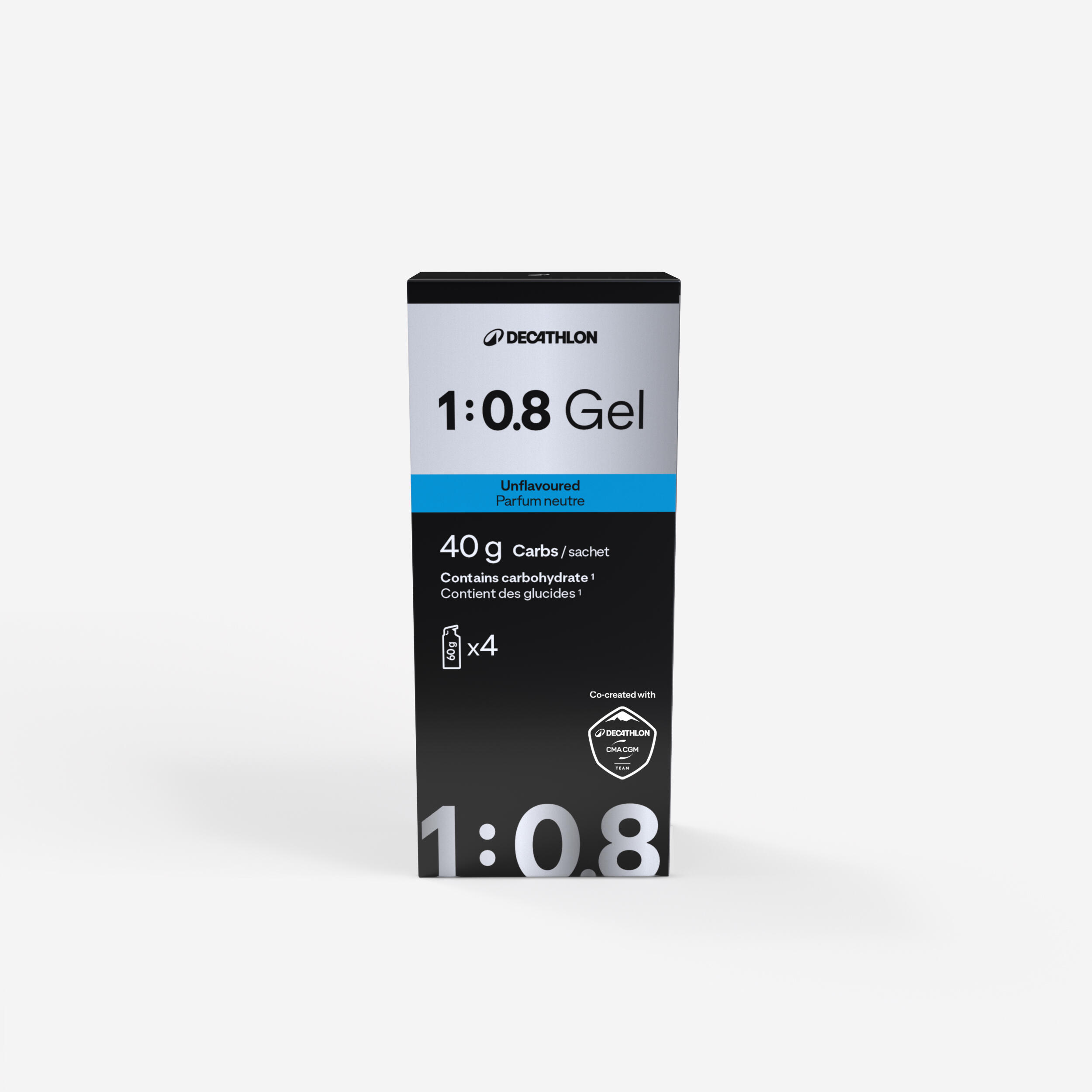
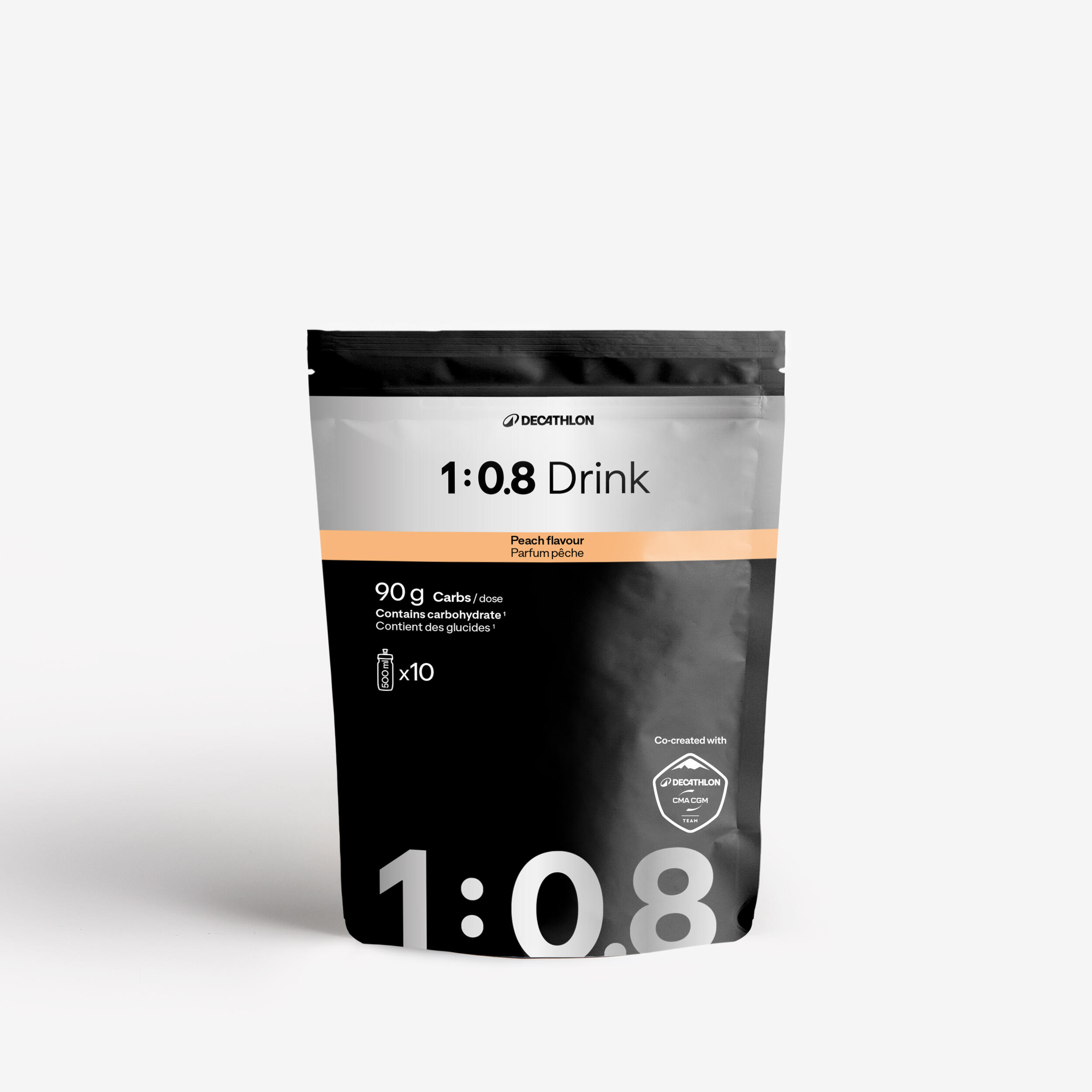
On the complementary side, some ultra-trail runners add a spirulina course during intense training blocks, to support fat oxidation and overall recovery — a product like the Decathlon Spirulina 84-tablet pack can fit into this routine, as a complement (not a replacement) to a well-planned carbohydrate strategy.
To build this plan hour by hour, check out our dedicated article: trail fueling for sensitive stomachs over 3h, which covers the fundamentals of digestive tolerance during exercise — a prerequisite before adding a new carb source like isomaltulose.
FAQ
Does isomaltulose fully replace maltodextrin on an ultra?
No. The data shows a benefit when isomaltulose is used as a complement, especially late in the race. Fully replacing fast carbs can reduce the rapid carbohydrate availability needed early on or during surges.
Where can I find isomaltulose for sports nutrition?
It’s marketed as Palatinose™ by BENEO and used by several sports nutrition brands in long-duration drinks or energy bars. Check the ingredient list to spot it.
Does isomaltulose cause digestive issues?
At moderate, well-spaced doses, no. But a 2015 study (Oosthuyse et al.) showed that at very high doses and frequency, isomaltulose can cause digestive discomfort. Introduce it gradually in training before testing it on race day.
Is isomaltulose useful for trail runs under 3 hours?
Its benefit is mainly shown for long efforts (5h and beyond), where glycaemic stability becomes decisive. For shorter formats, fast carbs remain the priority.
Sources
Hamilton RA, Xia R, Nicholas C, Churm R, McCarthy OM, Bracken RM (2025). Glycaemic Impact of Low- and High-Glycaemic Index Carbohydrate Diets in Ultra-Endurance Athletes: Insights From Continuous Glucose Monitoring. European Journal of Sport Science, 25(12):e70092. DOI: 10.1002/ejsc.70092
BENEO (June 2026). Lasting energy management for ultra-endurance athletes. https://www.beneo.com/news/palatinose-energy-management
Oosthuyse T et al. (2015). Ingesting Isomaltulose Versus Fructose-Maltodextrin During Prolonged Moderate-Heavy Exercise Increases Fat Oxidation but Impairs Gastrointestinal Comfort and Cycling Performance. International Journal of Sport Nutrition and Exercise Metabolism. PubMed
UTMB 2025: Courtney Dauwalter win; Western States 100 2026, headline favourites — source BPMoov, June 2026.