I still remember that mountain pass swallowed up in fog, legs empty, brain in a fog. The bonk. The kind you think you’d recognise but never truly see coming — until it’s too late. That day, I’d neglected my cycling fueling long ride strategy. A mistake I’ll never make again, and one I try to help every cyclist around me avoid.
Because yes, fueling starts well before the first pedal stroke. If you haven’t laid the right foundations with a proper breakfast before your ride, nothing you eat on the bike will fully compensate — you’ll start with a handicap. That said, in this article we’re going to focus on what happens during the ride: the rules, the products, the timing — so you arrive at the finish still standing and smiling.
1. Long cycling rides: why fueling is non-negotiable
Cycling is a “supported” sport — your weight is carried by the saddle. As a result, you can ride for hours without feeling as fatigued as you would running. And that is precisely the trap. Your engine is running, burning fuel, but hunger signals arrive late or not at all. By the time you feel depleted, your muscle glycogen is already seriously depleted.
Beyond one hour at moderate to high intensity, glycogen stores — the fuel stored in your muscles and liver — begin to run down seriously. If you don’t replenish them throughout the ride, you’re heading straight for hypoglycaemia, a drop in performance, a foul mood, and sometimes the ignominious sight of a support vehicle pulling up beside you.
Fueling is therefore neither a luxury nor an option reserved for “heavy eaters”. It is a performance strategy. And it can be learned.
2. The hourly carbohydrate rule: how it works
The foundation of endurance cycling nutrition comes down to one simple idea: during exercise, you need to provide carbohydrates regularly and progressively to maintain your energy level.
In practical terms, current scientific recommendations distinguish several levels based on duration and intensity:
- Moderate ride up to 1h30: a small amount of carbohydrates is enough, or even nothing if you’ve eaten well beforehand.
- 2- to 3-hour ride: you need to take in carbohydrates regularly each hour, spread out every 15 to 20 minutes.
- 3-hour ride and beyond: hourly intake needs to be substantial, and this is where the glucose/fructose ratio comes into play (more on that below).
The classic mistake? Waiting until you feel hungry. By that point, you’ve already fallen behind. The golden rule: set an alarm every 20 minutes and eat, even if you don’t feel the need. Your sense of hunger on the bike is unreliable.
3. Energy gels: effective but must be used correctly
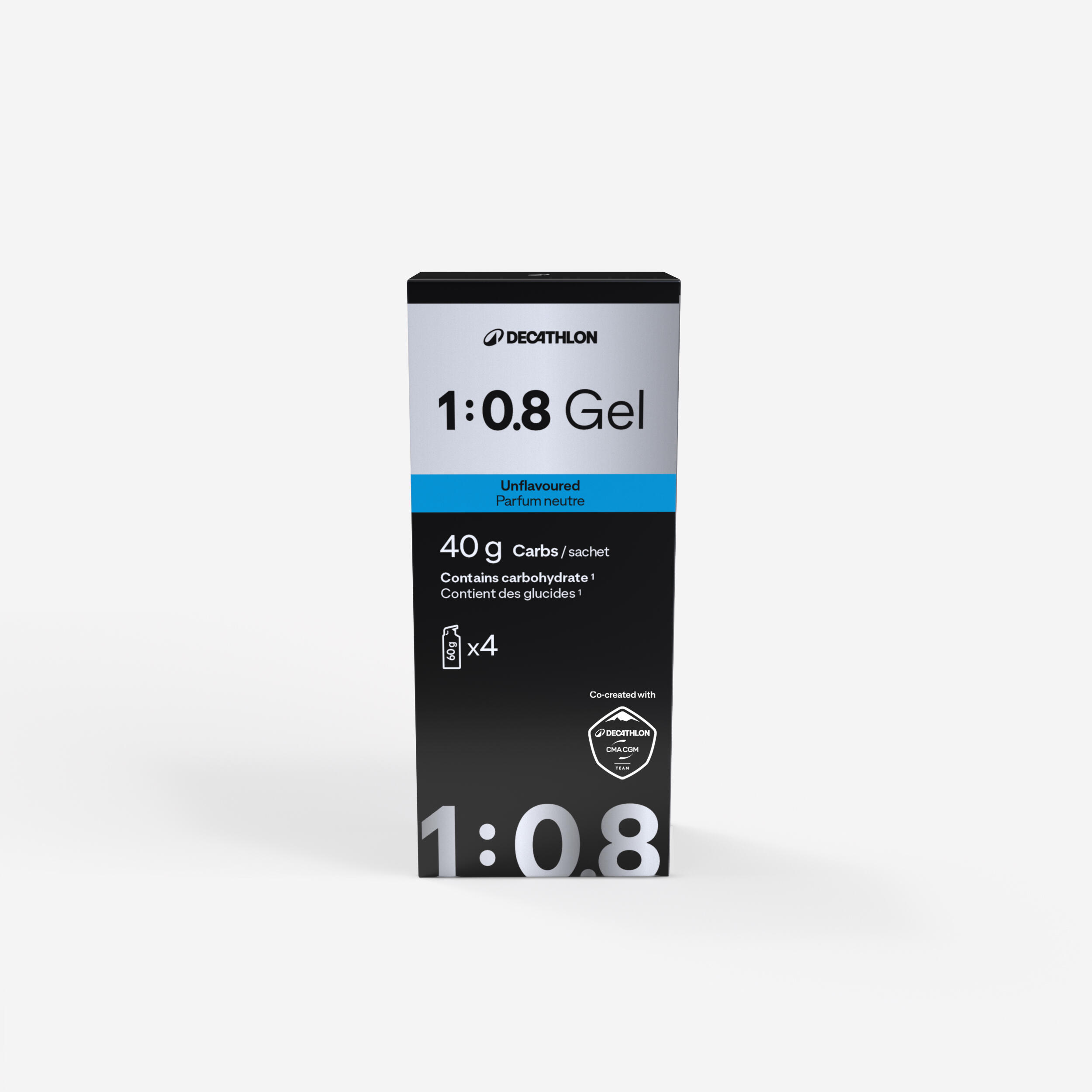
The energy gel is the most universal fueling tool on the bike. Compact, quick to take, easy to digest during effort. But it is also frequently misused.
A few key points:
- A gel must always be taken with a good mouthful of water. Swallowed dry, it is concentrated and can cause digestive upset, or even gastric hyperosmolarity — in plain terms, it causes a blockage.
- Caffeinated gels (often labelled “+caffeine” or “energy boost”) are effective for combating mental fatigue on long rides, but are best reserved for the second half of the ride.
- Don’t base your entire strategy on gels. The risk of saturation — physical and psychological — is real. After 3 or 4 gels, your stomach can start to protest.
Gels are a tool, not a food. Use them in a targeted way, not as the sole basis of your fueling.
4. Bars and solid food: when to switch to solids?
Solid food has its place on the bike, especially on long distances. It offers several advantages: it gives you a genuine sense of eating (which matters psychologically over 4 or 5 hours), it often provides fats and proteins that slow absorption and sustain you better over time, and it breaks the monotony of gels.
Good options to tuck into your jersey pocket:
- Cereal, date, or nut-based bars — easy to chew and gentle on the stomach
- Rice cake (the classic pro favourite) — homemade or shop-bought
- Banana — natural, digestible, practical
- Mini sandwiches with white bread and cheese or fruit compote — for ultra-long days
The rule: solid food is best eaten in the first few hours, when the digestive system is still running smoothly. Towards the end of a ride, at high intensity or in the heat, digestion becomes less efficient — switch to gels or energy drinks.
And obviously: eat while pedalling gently or during a real descent, never mid-climb at threshold intensity.
5. The glucose/fructose ratio: why it changes everything
This is the concept that has revolutionised endurance nutrition in recent years, yet it remains poorly understood by amateur cyclists.
Your small intestine has two separate transporters for absorbing carbohydrates: one for glucose (SGLT1), another for fructose (GLUT5). Each has a maximum hourly capacity. If you only use a single source (glucose alone, for example), you saturate one transporter while the other sits idle — as a result, some of the carbohydrates you’ve ingested are not absorbed, remain in the gut, ferment, and cause cramps, bloating, and a rather unpleasant bout of diarrhoea on a mountain pass.
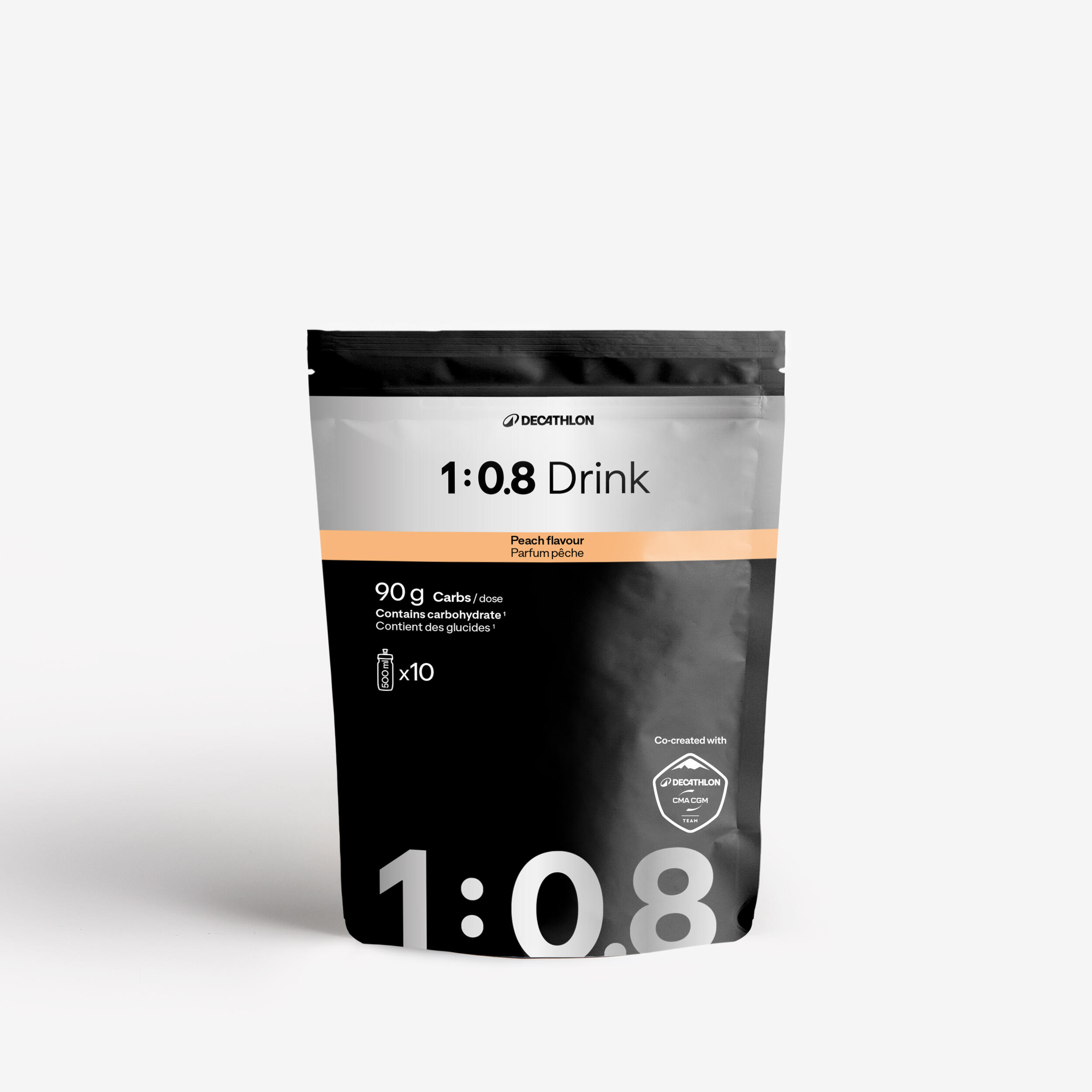
By combining glucose and fructose in an approximately 2:1 ratio, you activate both transporters in parallel and significantly increase your total hourly absorption capacity.
What this means for you in practice: on long rides (3h+), choose products that list “maltodextrin + fructose” or “glucose + fructose” in their ingredients. Most major sports nutrition brands have adopted this standard, but it’s not yet universal — read labels carefully.
This is the detail that makes the difference between finishing strong and collapsing in the final 30 kilometres.
6. Hydration and electrolytes during the ride
Water is the foundation — but on its own, it’s not enough. During exercise, you lose not only water but also sodium, potassium, magnesium, and calcium through sweat. These minerals are essential for muscle contraction and nerve transmission. Ignoring them exposes you to cramps, early fatigue, and hyponatraemia (too much water, not enough salt).
A few practical guidelines:
- Drink regularly, without waiting for thirst — small sips every 10–15 minutes
- In hot conditions, add electrolytes to at least one of your water bottles (tablets, powder, or isotonic drink)
- Sodium is the most important mineral to replenish — it regulates water retention and prevents cramps
On intense summer rides, needs multiply. Check my specific recommendations on hydration in hot weather to adapt your strategy.
And if you’re prone to cramps, you might be intrigued by the use of pickle juice for cramps — a surprising approach backed by recent studies on neuromuscular mechanisms.
7. A typical plan for a 2h, 3h, or 4h+ ride
2-hour ride
- Before leaving: complete breakfast, fully digested (at least 2 hours before)
- At 45 min: first intake, 1 gel or 1/2 energy bar with water
- At 1h15: second intake, bar or banana
- Fluids: 500 to 750 ml of water or isotonic drink
3-hour ride
- Before leaving: same as above + a well-stocked jersey pocket
- Every 20–25 min from the 40-min mark: regular intake (gel, bar, banana in rotation)
- 1 bottle of water + 1 bottle with electrolytes
- Refuel at the mid-point if possible
4-hour ride and beyond
- Same intake rhythm, increase the proportion of solids in the first half
- Manage digestive demands: solid → semi-liquid → liquid as the hours pass
- Plan caffeinated gels for the final 2 hours
- Map out refuelling points (bakeries, water fountains, corner shops) on your route
Recovery also begins at the end of your ride — what you eat in the window that follows matters just as much as what you consumed on the bike. Find my complete post-ride recovery nutrition strategy to close the loop.
And if you ride in the evening after work, managing energy before and during the ride is different — check my advice on the pre-evening training snack for late-day rides.
8. Ograal calculates your fueling plan based on your profile
Everything I’ve described above is the general framework. But every cyclist is different: your build, your training level, your ride intensity, the weather, the elevation gain — all of these change the calculations. What works for your riding partner won’t necessarily work for you.
That is exactly why Ograal exists.
Ograal is the sports nutrition app that generates your personalised fueling plan based on your profile, your ride for the day, and your food preferences. No more manual calculations, no more second-guessing: you enter your details, the app tells you what to eat, when, and how much — tailored to you, not to some fictional average cyclist.
The result: you arrive at the finish with energy to spare, you progress faster, and you genuinely enjoy your rides. That is what smart endurance looks like.
→ Try Ograal for free and generate your personalised cycling fueling plan