You’ve been there: 90 minutes into the race, your stomach revolts, you can’t get the gel down, the drink feels heavy, and you finish the last kilometers running on empty. The 3-hour effort is a pivotal zone: too long to ignore fueling, and short enough that many people haven’t properly conditioned their digestion to exercise. The result? Digestive issues that ruin the race when solid nutrition would have changed everything. I’m Ingrid Gallerini, sports dietitian specializing in endurance, and in this article I give you a concrete plan, adapted to your digestive sensitivity — with options based on the elevation gain of your course. For the fundamentals of trail running nutrition for endurance, I recommend starting with that complementary article before diving into the details here.
Trail 3h: Why Your Stomach Takes More of a Beating Than on Road
Running hammers your digestive system in three simultaneous ways. First cause: blood diversion. As soon as intensity rises, your body prioritizes blood flow to the active muscles at the expense of your internal organs. At 70% of your VO2max, intestinal blood flow can drop 60–80% — this is splanchnic ischemia. With less oxygen, your intestinal lining operates in slow mode and absorbs carbohydrates less efficiently.
Second cause, specific to trail: impacts and elevation. Every foot strike generates a shockwave that mechanically jostles your intestines, accelerating transit and triggering urgent needs. On climbs, intensity spikes, amplifying ischemia. On descents, shocks repeat at high frequency — double trouble for the stomach.
Third cause: sympathetic stress. Racing activates your sympathetic nervous system, slows gastric motility (how fast your stomach empties), and can trigger nausea or urgent needs even without any nutritional error. Add hyperosmolar gels or a too-concentrated drink on top of that, and water is drawn into the intestinal lumen — the perfect recipe for cramps and diarrhea.
On trail, these three mechanisms compound, especially when the elevation gain is high and intensity is variable. That’s why a plan designed for a sensitive stomach isn’t a luxury — it’s simply applied physiology.
The 3 Fueling Formats Compatible with a Sensitive Stomach
If you have a sensitive stomach, not everything works. Here are the three formats that sit best:
1. Isotonic Drink (or Slightly Hypotonic)
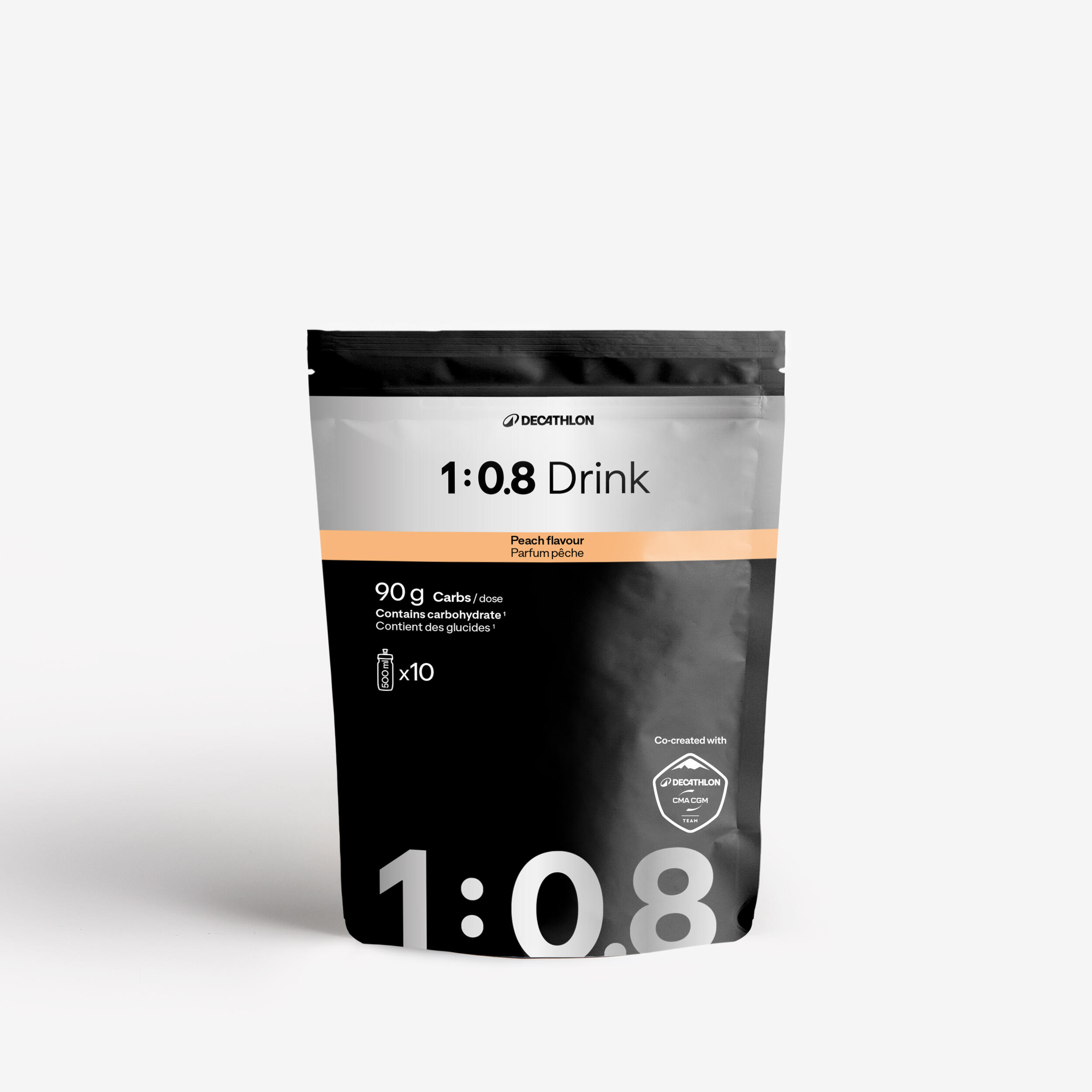
It delivers carbohydrates and electrolytes at a concentration close to that of your blood, limiting water transfer into the intestine. It digests quickly, is taken in small sips every 15–20 minutes, and covers both bases: hydration and energy. If you tend toward nausea with gels, the drink alone can cover most of your needs on a 3-hour trail.
2. Fractionated Gels (Half at a Time)
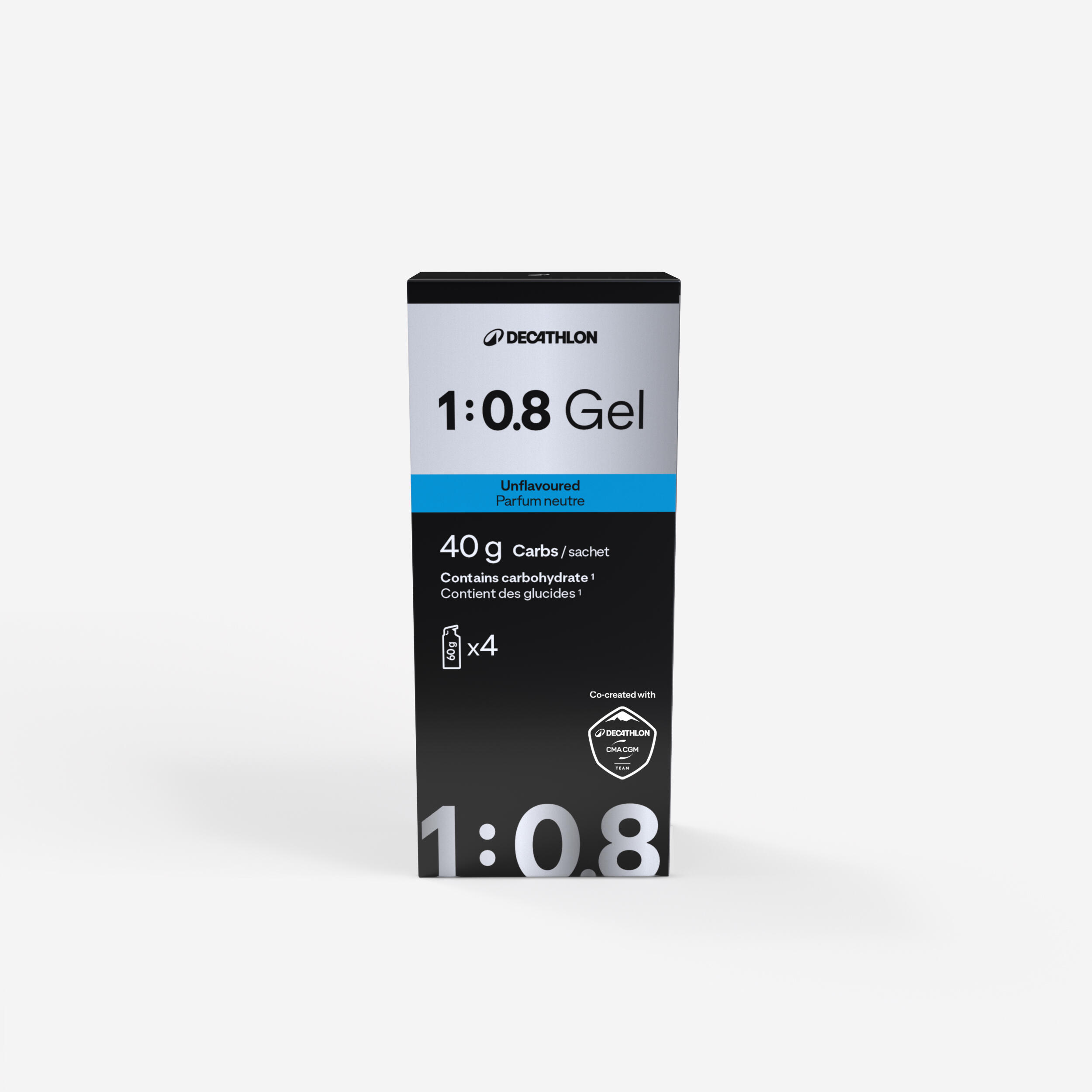
Taking a full gel in one go represents a concentrated carbohydrate load that can saturate your intestinal transporters and trigger fermentation. The solution: take half a gel every 20 minutes rather than a full gel every 40 minutes. Same total intake, but instantaneous load cut in half. Choose gels based on maltodextrin + fructose, avoid those very high in fructose alone or loaded with caffeine — both aggravating factors for sensitive guts. For a detailed understanding of why gels can cause stomach issues with gels, that article has the full picture.
3. Fruit Puree (Squeeze Pouch)
Underestimated and often dismissed by experienced runners, fruit puree is actually one of the best allies for a sensitive stomach. Fluid texture, natural carbohydrates (fructose + glucose at a balanced ratio), easy to swallow even when your mouth is dry. It’s osmotically gentler than a standard gel, goes down well on climbs, and gives you the psychological feeling of “real food” that helps you hold on. On an elevation-gain trail, it can replace every other gel with no drawback.
Low Elevation Gain Trail (Flat Terrain): Plan — Drink + Fractionated Gels
On flat terrain, intensity is more stable, intestinal blood flow less disrupted, and your stomach can tolerate gels better. The drink remains your backbone:
- Every 15–20 min: 3–4 sips of isotonic drink (approximately 100–150 ml)
- Every ~40 min: half an energy gel with an extra sip of water
• If it’s hot: increase drink frequency and add electrolytes. For everything on hydration in hot weather, I have a dedicated article that applies to trail as well.
- What to avoid: full gels swallowed without water, highly sweetened drinks, dried fruit bars (fiber + fat = slow digestion)
The golden rule on flat terrain: the drink does 70% of the work, fractionated gels fill the rest. If your stomach is particularly unpredictable, you can even replace the gels with purees — the result is identical over 3 hours.
High Elevation Gain Trail (Variable Intensity): Plan — Puree + Light Solid
With elevation gain, your intensity spikes on climbs, worsening intestinal ischemia. Gels go down harder on ascents. The solution: shift carbohydrate intakes to recovery moments (top of climb, flat sections, gentle descent), and favour purees or light solids.
- On climbs: drink only, no gel or puree — focus on the effort
- At the summit or on flat sections: puree or half-gel + water. This is when you refuel
- On gentle descents: small sips of drink, perhaps a salted cracker or rice cake if your stomach allows
- Recommended light solids: salted crackers, rice cake, very ripe banana (if you’re carrying one). Avoid bars too rich in fat or fiber
Salt is your ally on elevation-gain trails: it compensates for increased sweat losses during intense efforts, helps maintain electrolyte balance, and can reduce muscle cramps. A pinch in your drink or salted crackers every hour is enough.
Universal Timing: Every 20 Minutes, No Matter What
The single most important rule of any 3-hour fueling, sensitive stomach or not: start eating within 20–30 minutes and maintain a consistent rhythm every 20 minutes. Waiting until you’re hungry or bonking is already too late — your brain demands glucose before you register the signal. To go deeper on race day nutrition, that article gives you the complete framework.
Here is the standard schedule over 3 hours, covering all variants:
This table is indicative. The key point: never let more than 30 minutes pass without an intake, even a minimal one. For a sensitive stomach, the regularity of small takes beats one large make-up dose after a low.
What to Absolutely Avoid with a Sensitive Stomach
Here are the most common mistakes I see — and which alone explain the majority of digestive crises on 3-hour trail races:
- Full gels taken at once, without water: too-high osmotic load, diarrhea risk
- Caffeine in gels if you’re not accustomed to it: speeds up transit and dehydrates
- Over-concentrated drinks (sodas or straight fruit juice): draws water into the intestine instead of hydrating you
- Pre-race meal too high in fiber or fat: slows gastric emptying, sits in your stomach through the first hours
- New products on race day: the absolute rule — never test on race day what hasn’t been tested in training
- Drinking too much plain water without electrolytes: risk of diluting blood sodium, especially if you sweat heavily
- Fueling on intense climbs: wait for a flat section or descent — your stomach is 80% closed at high intensity
On progressivity and gut training to absorb carbohydrates during exercise: this is a key point many overlook. Your digestive tract adapts like your muscles — but it takes time and consistency in training. If you wait until race day to “test” a 45–60g/h intake, you’re taking an unnecessary risk. Start practicing with your drink and gels on long training runs, even at small doses, to progressively condition your gut.
Ograal Calibrates Your Plan Based on Duration, Elevation, and Tolerance
Everything I’ve shared in this article is solid groundwork — but true precision comes from personalization. Two runners doing the same 3-hour trail don’t have the same needs if one sweats twice as much as the other, if one has a well-trained gut and the other doesn’t, or if one is running flat and the other with 800m of elevation gain.
That’s exactly what Ograal does: the app calculates your personalized fueling plan by cross-referencing your target duration, elevation gain, format preferences (gel, puree, solid), and digestive sensitivity. You fill in your profile once, and you get a precise timing schedule, adapted products, and realistic quantities — without drowning in calculations. Try Ograal for your next trail.
Sources
Ograal — Nutrition during a trail run: https://ograal.com/fr/alimentation-trail-endurance/
Nutripure — Gastrointestinal problems during running: https://www.nutripure.fr/fr/blog/problemes-gastro-intestinaux-pendant-course-n651
COPMED — Digestive disorders during exercise in athletes: https://www.copmed.fr/fr/content/206-les-troubles-digestifs-a-leffort-chez-le-sportif
European Journal of Applied Physiology — Exercise and gastrointestinal symptoms (2017): https://pmc.ncbi.nlm.nih.gov/articles/PMC5694518/
Sports Medicine — The Effect of Gut-Training on Markers of GI Function (2023): https://pmc.ncbi.nlm.nih.gov/articles/PMC10185635/