The End of Cups: A Trend (and an Opportunity)
You’ve probably noticed it: more and more marathons are eliminating or drastically reducing plastic cups. The Paris Marathon has led this eco-friendly shift, followed by dozens of “zero-waste” races across Europe. This isn’t a problem — it’s an invitation to take full control of your hydration.
Eliud Kipchoge, the fastest marathoner in history, never leaves hydration to chance. His race preparations always include a personalised fueling strategy, planned to the kilometre. That’s the exact mindset you need when cups disappear from aid stations: anticipate, plan, and test.
For you, the self-sufficient runner, this is actually an advantage: you no longer depend on crowded aid tables, you don’t have to slow down to grab a cup, and you control exactly what you consume. Let’s break down how to structure it all.
Useful reads: Race day nutrition — when every hour counts | Cyclist hydration in summer heat
Ograal Automatically Plans Your Drink + Gel Fueling
Managing your flask, gels and isotonic drink all at once while running at target pace is cognitively demanding. That’s where Ograal steps in.
The app generates a complete fueling plan adapted to your race start time, estimated duration, and weather forecast. In practice:
- Precise timing for your gel and drink intakes, calibrated to your actual start time
- Gels / drinks / bars planned for up to 7 hours of effort — perfect for marathons and beyond
- In-race reminders sent directly to your phone or connected watch
- Carbohydrate loading management for the evening and morning before race day
Enter your target duration and pace, and Ograal automatically calculates how many carbohydrates you need per hour, when to take each gel, and how to balance your flask with your gels. Get the app at https://ograal.app.
Choosing Your Gear: Flask, Belt or Vest?
The right gear makes all the difference. Here are the main options for running a marathon with your own hydration.
Soft flask 250 ml
Light, easy to hold in hand or tuck into a belt, the 250 ml is ideal when refill points exist on course. It weighs almost nothing once empty. Drawback: it empties quickly if you run fast or in the heat.
Soft flask 500 ml
The reference choice for most marathoners. It holds enough volume for 30–45 minutes without refilling, depending on your drinking rate. Slightly heavier, it can feel awkward if you’re not used to running with it.
Running belt (Nathan, Ultimate Direction…)
A belt with one or two flasks frees your hands and distributes weight more evenly. Ideal for runners who don’t like carrying anything. Make sure it doesn’t bounce: some poorly fitted models cause chafing over a long race.
Minimalist vest
For trail runners or those wanting to carry gels + flasks + solid food, the minimalist vest (500 ml to 1 L) offers the most comfort over long distances. Warmer in summer, but unbeatable for full autonomy.
According to Sawka et al. (2007, ACSM), fluid needs during exercise range from 400 to 800 ml/h depending on intensity and ambient temperature — meaning your flask volume should be sized according to the distance between refill points on your course. Sawka MN et al. (2007). Med Sci Sports Exerc. DOI: 10.1249/mss.0b013e31802ca597
Hydration Strategy: How Much, When, What?
The most common mistake among marathoners? Drinking too much — or not enough. Both have serious consequences.
The dosage: 100–200 ml every 15–20 minutes
Aim for 100 to 200 ml every 15 to 20 minutes depending on your sweat rate, temperature and body weight. This corresponds to a range of 500 to 800 ml/h, perfectly aligned with ACSM recommendations. In cool conditions (<15°C), you can drop to 400 ml/h. In heat (>25°C), target 700–800 ml/h.
What to put in your flask
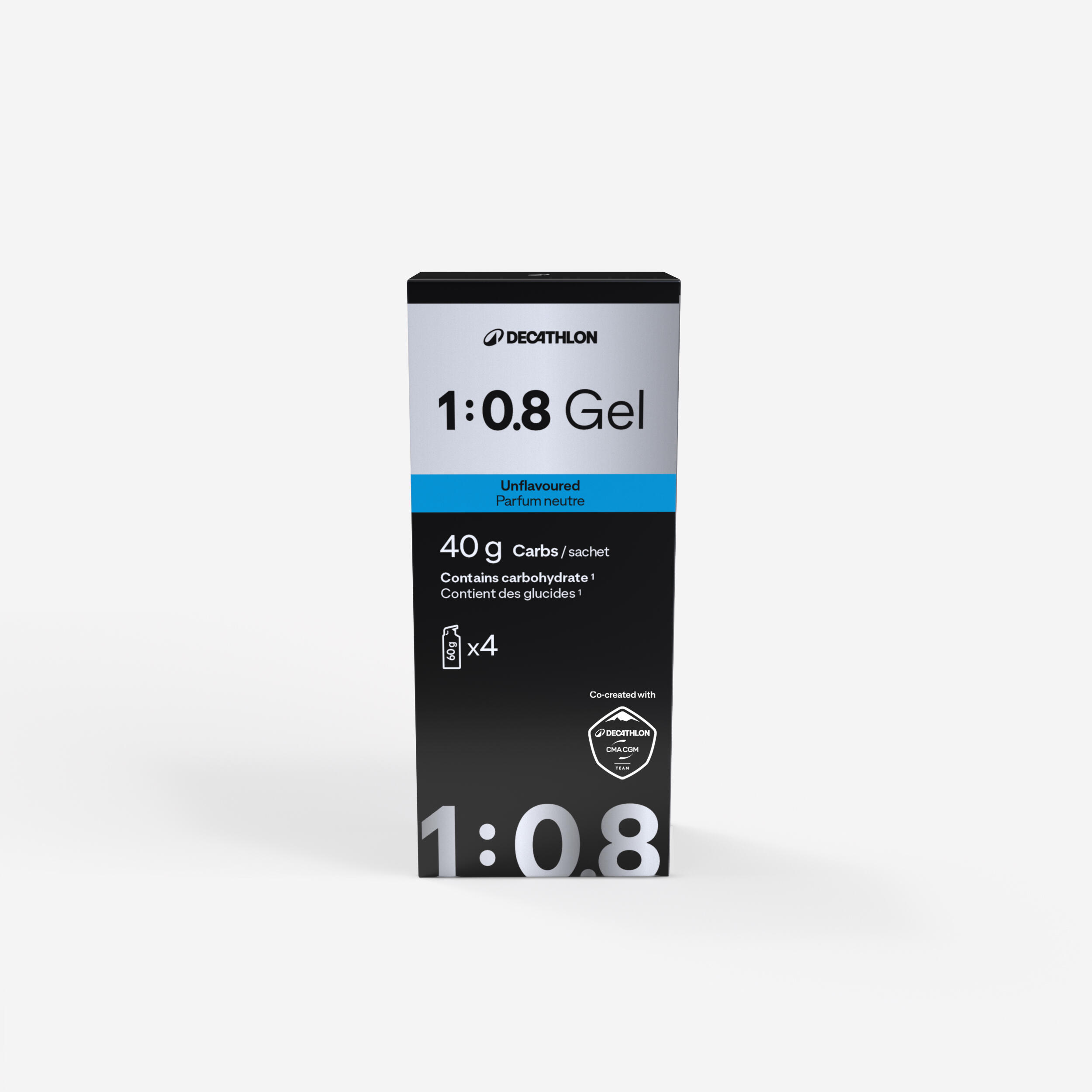
Plain water + separate gels: the simplest combination. You control carbohydrate intake precisely through your gels.
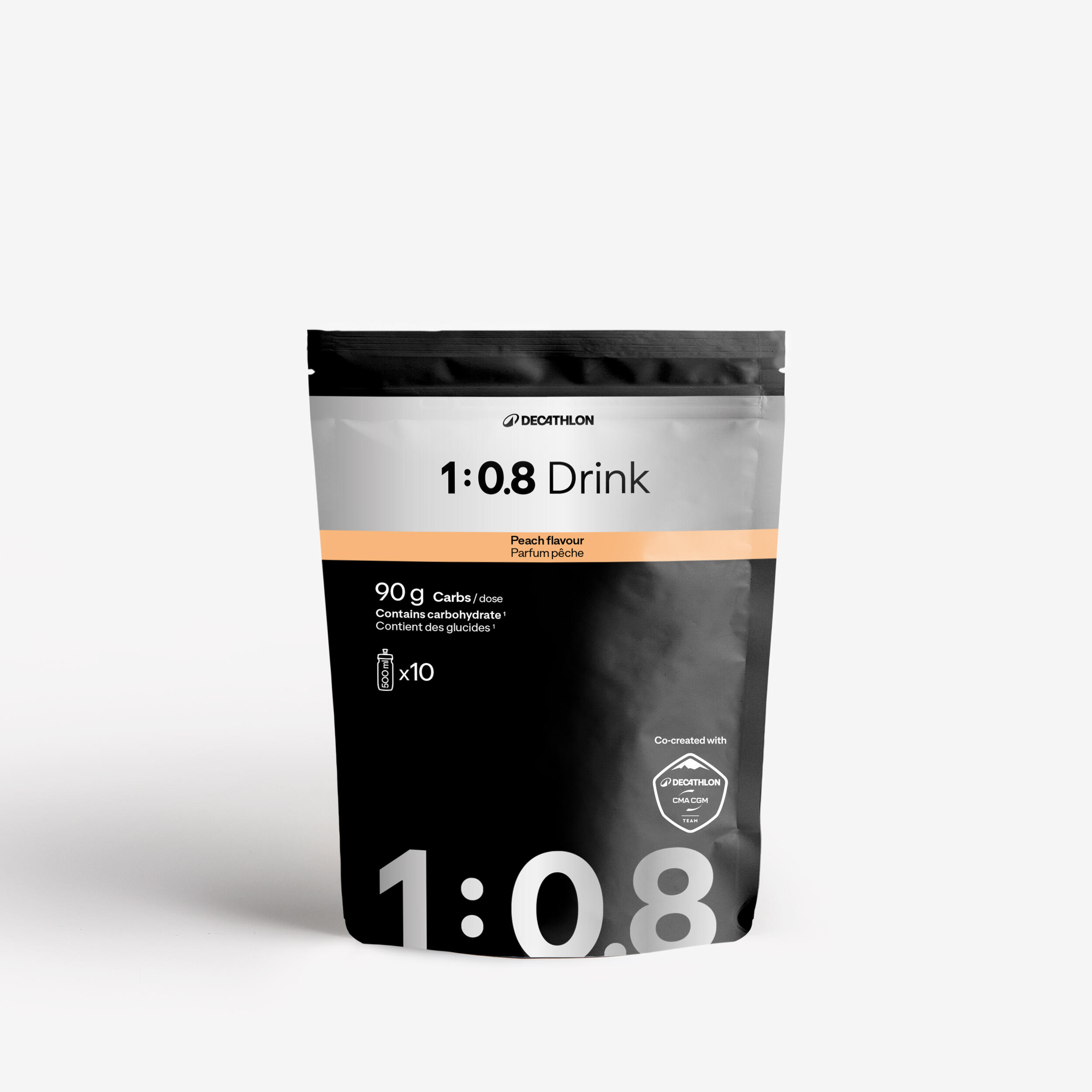
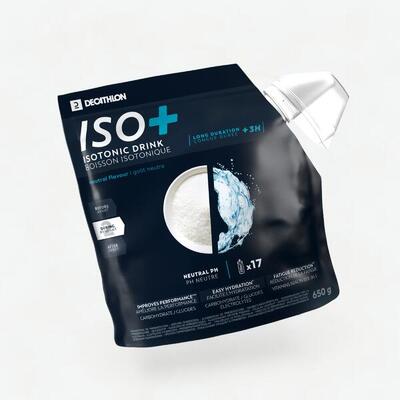
Isotonic drink (water + carbs + electrolytes): all-in-one, convenient if you dislike taking many gels. Adding a pinch of salt or an electrolyte tablet in the heat is a good idea.
Watch out for hyponatraemia
Casa et al. (2000) warn about an often-underestimated risk: hyponatraemia — a drop in blood sodium caused by drinking excessive amounts of plain water without electrolytes. This risk is real among slower marathoners who drink at every aid station without feeling thirsty. With a flask, you drink to thirst and to your plan — not because a cup appears in front of you. Casa DJ et al. (2000). J Athl Train, 35(2):212-224. PMID: 16558633
Combining Flask and Gels: The Optimal Plan
What’s in your flask directly determines your gel plan. Here’s how the two fit together:
Jiménez-Alfageme et al. (2025) confirm that the best-performing marathoners target 60 g of carbohydrates per hour for events of this duration, combining drinks and gels. Beyond 2h30, some elite runners push up to 90g/h using multiple carbohydrate sources (glucose + fructose). Jiménez-Alfageme R et al. (2025). Sports Medicine Open, 11:14. DOI: 10.1186/s40798-024-00801-w
Important reminder: these values must be trained — your gut adapts to absorb more carbohydrates when you regularly practise fueling during training runs.
Training With Your Flask: Non-Negotiable
Don’t discover your flask on race day. Training with your race gear is non-negotiable, for several reasons.
- Thermal shock: a cold flask held in hand for 3 hours can cause muscle cramps. Test different temperatures during training.
- Arm swing: carrying a flask slightly changes your arm movement. A few long runs are enough to integrate it naturally.
- Gel placement: with a belt or vest, think carefully about where each gel sits for easy, no-slow-down access.
- On-the-go refilling: practise filling your flask without stopping at aid stations — it’s a technical skill on its own.
Noakes (2012) emphasises a pragmatic approach: optimal hydration is not a universal mathematical formula — it is a personal adaptation to test and refine through training. Your sweat rate, gastric tolerance, and what you feel at effort all require individual calibration. Noakes TD (2012). Waterlogged. Human Kinetics.
Practical tip: on your long runs (>25 km), always train with the exact gear you’ll race in. It’s the only way to validate that everything works together.
Pre-Race Checklist
The evening and morning before the race, tick every item:
- Flask filled and tested (capacity, closure, no leaks)
- Drink mix or water: product already used in training, nothing new on race day
- Gel supply counted and distributed on belt/vest according to Ograal plan
- Refill points identified on the official course map (typically km 5, 10, 15, 20…)
- Electrolyte tablets or salt if high temperatures expected
- Ograal fueling plan reviewed and memorised (or reminders activated on watch/phone)
- Belt/vest adjusted and tested with full load (don’t adjust cold on race morning)
Ograal builds your complete drink + gel plan — calibrated to your pace, duration and weather forecast — with in-race reminders. Get the app at https://ograal.app.
Also read: Drinking on the bike in summer heat — best practices
Recommended Product
Sources
1. Sawka MN et al. (2007). American College of Sports Medicine position stand. Exercise and fluid replacement. Med Sci Sports Exerc, 39(2):377-390. DOI: 10.1249/mss.0b013e31802ca597
2. Noakes TD (2012). Waterlogged: The Serious Problem of Overhydration in Endurance Sports. Human Kinetics. https://humankinetics.com/products/waterlogged
3. Casa DJ et al. (2000). National Athletic Trainers’ Association Position Statement: Fluid Replacement for Athletes. J Athl Train, 35(2):212-224. PMID: 16558633
4. Jiménez-Alfageme R et al. (2025). Nutritional Intake and Timing of Marathon Runners. Sports Medicine Open, 11, 14. DOI: 10.1186/s40798-024-00801-w