Cycling in Summer: Why Heat Changes Everything About Your Carb Strategy
During the Mediterranean stages of the Tour de France, teams like UAE Team Emirates don’t just lighten the bikes when temperatures exceed 35°C — they completely rethink their fueling strategy. Tadej Pogačar, multiple Tour winner and a dominant force in the classics, illustrates this perfectly: in extreme heat, his team reduces maltodextrin concentrations, favours more diluted drinks, and breaks intake into doses every 15 minutes rather than relying on large gels taken at wide intervals. What pro teams like UAE Emirates do, you can apply the same principles to your own summer riding — at your level, with your own season goal.
The problem is that most amateur cyclists continue to follow the same fueling plan at 32°C that they use in cool weather. The result: mid-ride nausea, a heavy stomach, paradoxical hypoglycaemia despite having taken plenty of gels. Not because they ate too little, but because heat has profoundly changed the way their body processes carbohydrates.
Heat and Gastric Emptying: The Mechanism You Need to Understand
When temperature rises, your body redirects blood flow to the skin to dissipate heat — at the expense of the digestive system. Gastric emptying slows down: food and drinks remain longer in the stomach. A landmark study (Neufer et al., 1989[1]) demonstrated that the volume of water emptied toward the intestine was inversely correlated with rectal temperature (r = −0.76): the hotter you get, the slower your stomach empties.
This has a direct impact on your fueling: a concentrated gel at 60–70 g of carbs per hour, perfectly tolerated at 18°C, can become a digestive bomb at 32°C. The gel stagnates in the stomach, creates local osmotic pressure, triggers nausea — and meanwhile, your muscles are starved of available fuel. Jentjens et al. (2002[2]) measured that the oxidation of ingested carbohydrates was significantly reduced during exercise in the heat compared with the same effort in cool conditions, even though muscle glycogen use increased. In other words: your body burns more endogenous carbohydrates but absorbs the ones you give it far less efficiently.
Reduce Concentration: From 60–70 g/h Down to 45–55 g/h Above 28°C
The basic rule is simple: less concentrated means better tolerated. At temperatures above 28°C, aim for 45 to 55 g of carbohydrates per hour rather than the usual 60–70 g/h. In extreme heat (> 35°C), some well-trained cyclists drop to 40 g/h and compensate with lightly sweetened drinks.
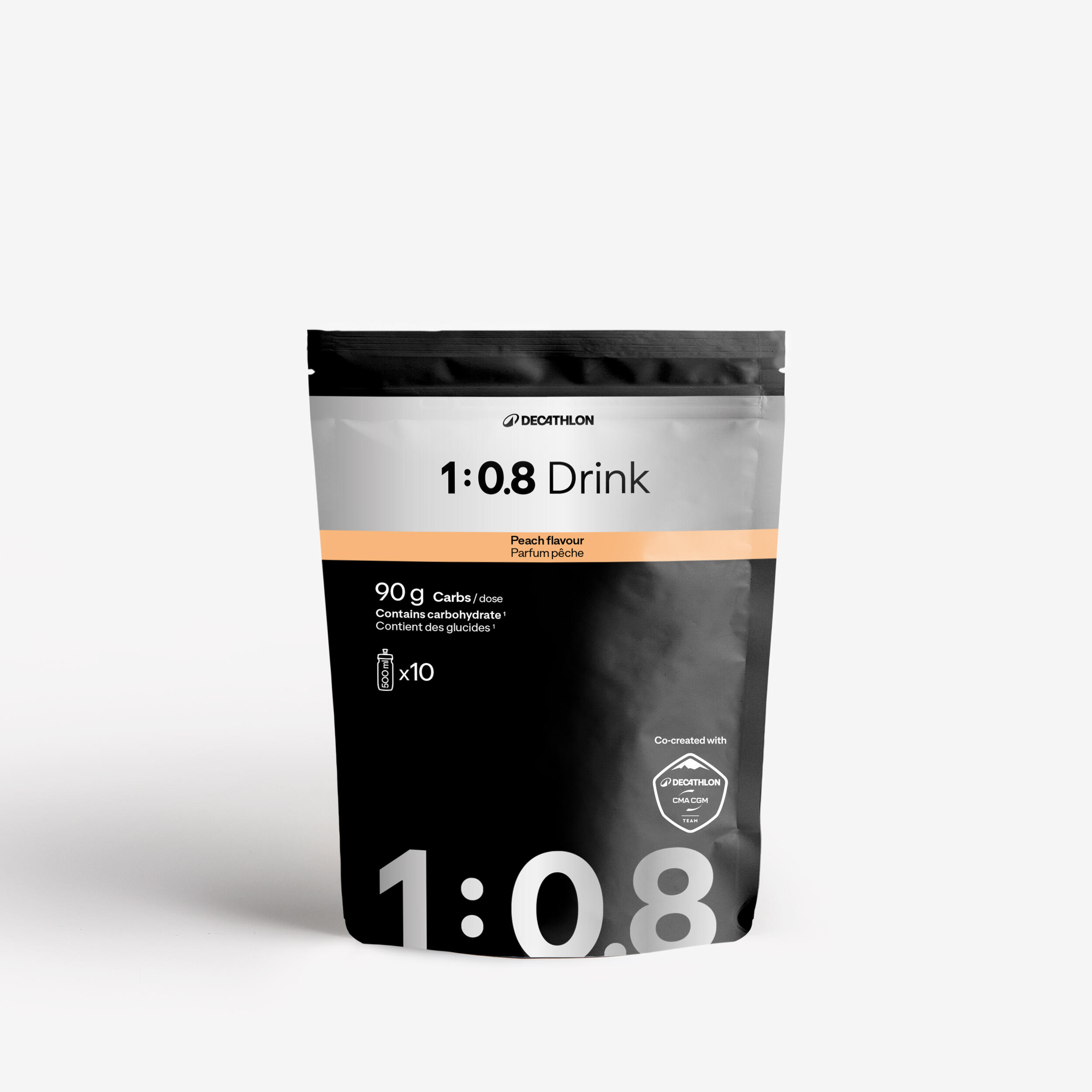
The form matters as much as the dose. Prioritise diluted drinks (4–5% carbohydrates) over concentrated gels: they provide both carbohydrate intake and hydration simultaneously. A glucose + fructose drink has an additional advantage in the heat: Jentjens et al. (2006[3]) showed that combined ingestion of glucose and fructose during exercise in the heat increased exogenous carbohydrate oxidation by 36% compared to glucose alone, while also improving fluid availability.
Split Doses Every 15–20 Minutes: Timing Changes Everything
In hot weather, large boluses — one full gel every 45 minutes — amplify the gastric emptying problem. Each concentrated intake slows digestion further. The winning strategy: micro-doses every 15 to 20 minutes.
- 3–4 sips of diluted carbohydrate drink every 15 minutes
- If using gels, split each one into two doses 10–15 minutes apart
- Never take a gel without chasing it with at least 200 ml of water
- Hydrogels (encapsulation formula) are better tolerated in the heat due to their progressive release
A recent systematic review (Salame et al., 2026[4]) confirms that lower carbohydrate concentrations with multiple transportable carbohydrates (glucose + fructose) are recommended for preserving gastrointestinal health and performance in high heat.
Real-World Case: 5-Hour Ride at 32°C vs 20°C
Same effort, same target power, same duration — two radically different fuelling plans.
In practice: if you set off at 6 am and it’s already 25°C, start with your heat plan from the beginning. Don’t switch back to the standard plan hoping you’ll be fine — at 5 hours of effort, digestive debt accumulates.
Hydration and Sodium: The Inseparable Equation
Heat fuelling cannot be optimised without addressing hydration. Dehydration further slows gastric emptying and increases muscle glycogen use. For details on volumes and sodium concentrations, see the dedicated article on sodium and drinks in the heat (FR) — but remember the essential point: a lightly sweetened drink with electrolytes will always outperform a concentrated gel followed by plain water at 30°C.
The Right Product for Strong Summer Riding
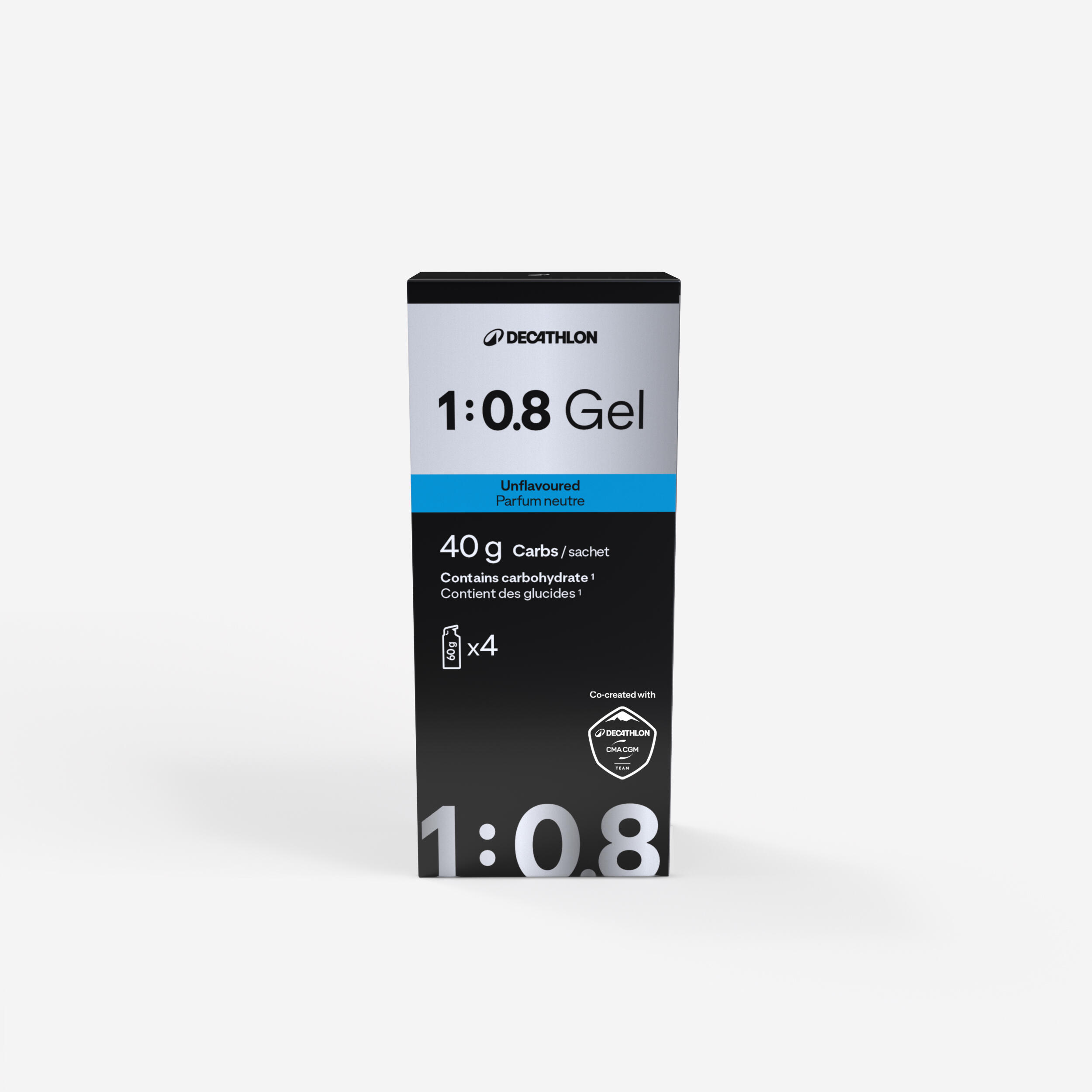
The Decathlon Hydrogel Energy Gel Orange 67ml is an excellent choice for summer rides: its hydrogel formula encapsulates the carbohydrates for progressive release, significantly reducing the risk of gastric discomfort. Less aggressive than a standard high-concentration gel, it fits perfectly into a micro-dosing strategy every 15–20 min.
→ Hydrogel Energy Gel Orange 67ml — view on Decathlon
Take Action with Ograal
Your fuelling plan adapted to the day’s weather, your fitness level, and your season goal — that’s exactly what Ograal does automatically. No more manual recalculation when a heatwave hits. Try Ograal for free and arrive at your next summer ride with a plan that handles the heat.
Sources
[1] Neufer PD, Young AJ, Sawka MN. Gastric emptying during exercise: effects of heat stress and hypohydration. Eur J Appl Physiol Occup Physiol. 1989;58(4):433–9. https://doi.org/10.1007/BF00643521
[2] Jentjens RL, Wagenmakers AJ, Jeukendrup AE. Heat stress increases muscle glycogen use but reduces the oxidation of ingested carbohydrates during exercise. J Appl Physiol. 2002;92(4):1562–72. https://doi.org/10.1152/japplphysiol.00482.2001
[3] Jentjens RL, Underwood K, Achten J, Currell K, Mann CH, Jeukendrup AE. Exogenous carbohydrate oxidation rates are elevated after combined ingestion of glucose and fructose during exercise in the heat. J Appl Physiol. 2006;100(3):807–16. https://doi.org/10.1152/japplphysiol.00322.2005
[4] Salame A, Brown D, Oueijan K, McCullough D. Carbohydrate supplementation for endurance exercise in the heat: a systematic review with practical recommendations. J Int Soc Sports Nutr. 2026. https://doi.org/10.1080/15502783.2026.2669307
[5] GSSI — Hydration and Nutrition Considerations for Endurance Cycling Exercise in the Heat. https://www.gssiweb.org/en/sports-science-exchange/article/hydration-and-nutrition-considerations-forendurance-cycling-exercise-in-the-heat