Carb-loading means filling your glycogen stores to the maximum before a long event. Done well, it’s one of the most reliable performance levers in endurance sport. Done badly, it amounts to a pasta party that weighs you down without filling you up. How many days, how much carbohydrate, which foods: here’s the complete protocol, for the marathon, trail running, sportives and triathlon.
In short: carb-loading is only useful for efforts longer than 90 minutes. It lasts 1 to 3 days depending on the length of the event, with 8 to 12 g of carbohydrate per kilo of body weight per day, lighter training, and less fibre and fat. There’s no need to “empty” your stores first: that old protocol was abandoned long ago.
Why carb-loading works
Your body stores around 400 to 500 g of glycogen in your muscles and liver, or 1,600 to 2,000 kcal. It’s your main fuel at a sustained pace. When it runs out, your pace drops: the famous marathon “wall” or the bonk on the bike.
By sharply increasing your carbohydrate intake in the days before the event, while cutting back on training, you can fill your stores well beyond their usual level. According to the review by Hawley et al. (1997), carb-loading delays fatigue by about 20% and improves performance by 2 to 3% in events lasting more than 90 minutes. Below that, it adds little: normal stores are enough.
36 to 48 hours is enough: what the research says
The original protocol (Bergström and Hultman, 1960s) required a two-part week: three days of hard training and low carbohydrate to empty the stores, then three days of loading. It’s unpleasant, risky just before a race, and unnecessary. Bussau et al. (2002) showed that a single rest day at about 10 g of carbohydrate per kilo is enough to almost double muscle glycogen. Current guidelines (Burke et al., 2011) recommend 10 to 12 g/kg per day over the 36 to 48 hours before an event lasting more than 90 minutes.
How many days and how much carbohydrate?
| Length of your event | Loading days | Carbohydrate per day |
|---|---|---|
| Under 90 min (10K, sprint triathlon) | no loading: carbohydrate-rich meals the day before | 5 to 7 g/kg |
| Up to 2 hours (half-marathon, Olympic triathlon) | the day before (D-1) | 7 to 10 g/kg |
| 2 to 4 hours (marathon, sportive) | D-2 and D-1 | 8 to 12 g/kg |
| Over 4 hours (long trail, Ironman, slower 70.3) | D-3, D-2 and D-1 | 8 to 12 g/kg, highest on the last two days |
For a 70 kg athlete, 10 g/kg means 700 g of carbohydrate a day: far more than usual. So you need to change what’s on your plate, not just add a plate of pasta.
The protocol, step by step
Loading days
- Ease off training: short, easy runs or rides. Rested muscles store more.
- Put carbohydrate at the centre of every meal: pasta, rice, couscous, potatoes, white bread, low-fibre cereals.
- Cut back on fibre: pulses, raw vegetables, cabbage, wholegrains. They take up room and irritate the gut.
- Cut back on fat (cream sauces, cheese, cured meats, fried food): it fills you up without filling your stores.
- Keep some protein at each meal, in moderate portions.
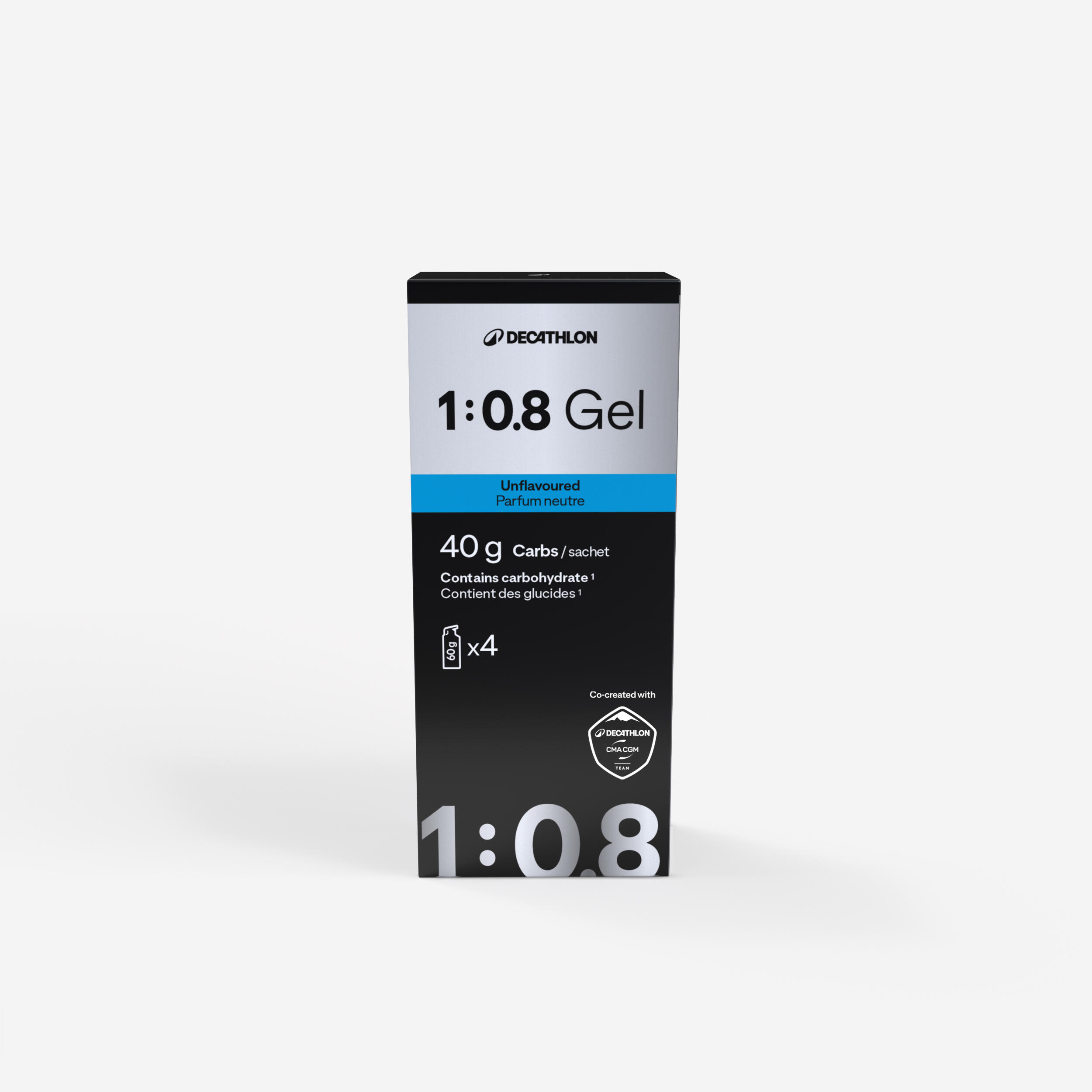
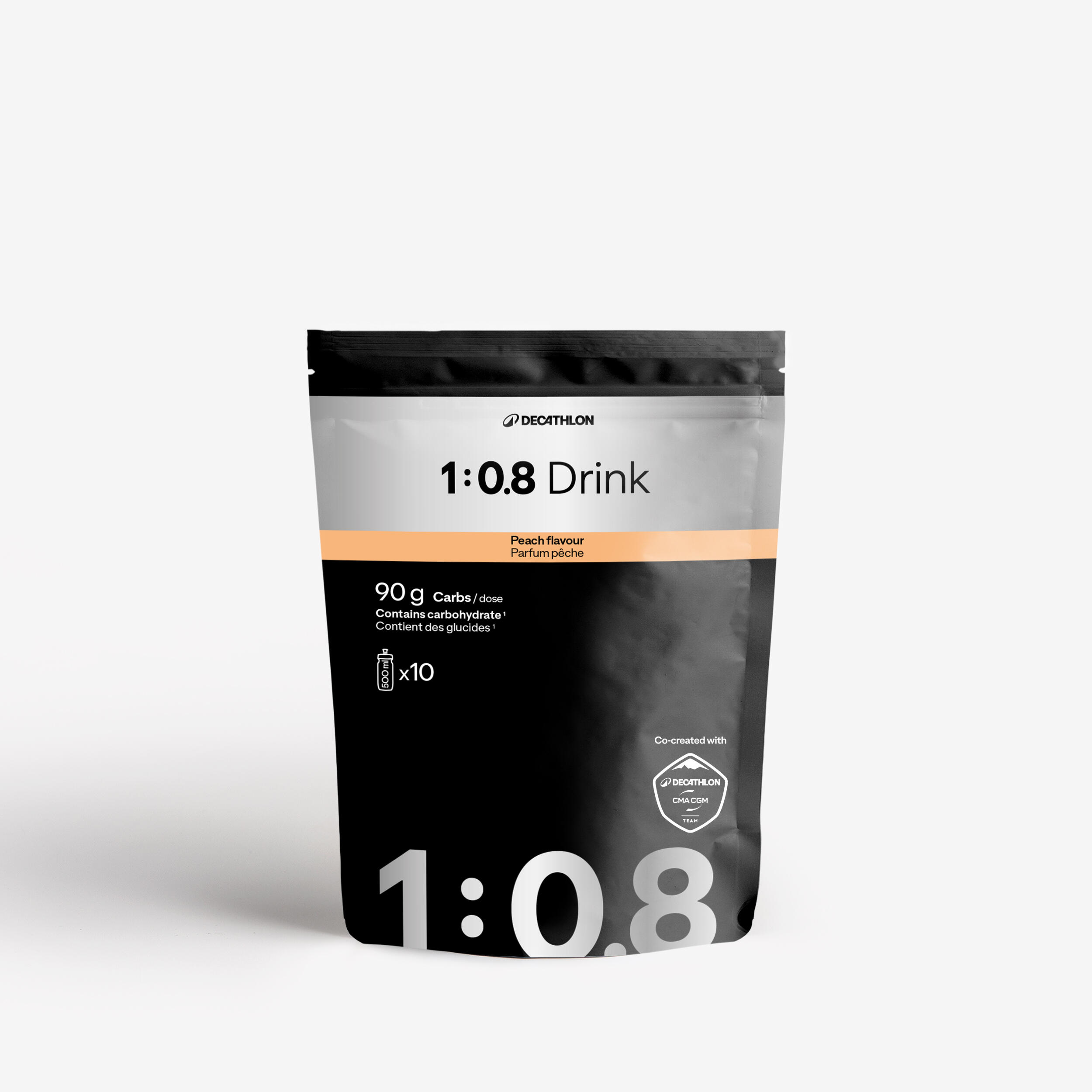
- Use liquid carbohydrate to reach your target without stuffing yourself: fruit juice, maltodextrin drink, cordial.
- Drink regularly: each gram of glycogen stored comes with about 3 g of water.
The day before
Eat dinner early, keep it simple and easy to digest, with nothing new, nothing spicy and no alcohol. Fibre and fat are kept to a minimum.
Race day
A carbohydrate-rich breakfast 2.5 to 3 hours before the start (about 1 to 2 g/kg), then perhaps a small sugary snack 15 to 30 minutes before. During the event, fueling takes over: 30 to 60 g of carbohydrate per hour up to 2.5 hours of effort, and up to 90 g/h beyond that, if your gut is trained for it.
Example day at 700 g of carbohydrate (70 kg athlete)
| Meal | Foods | Carbohydrate (approx.) |
|---|---|---|
| Breakfast | 150 g baguette, 40 g jam, 1 banana, 250 ml orange juice | 160 g |
| Snack | 2 cereal bars, 500 ml sports drink | 70 g |
| Lunch | 150 g pasta (dry weight) with tomato sauce, 50 g bread, 1 fruit purée | 170 g |
| Snack | 500 ml maltodextrin drink (60 g), 4 rice cakes | 90 g |
| Dinner | 120 g rice (dry weight), a little chicken, 50 g bread, 1 rice pudding | 150 g |
| Evening | 250 ml fruit juice, 2 crispbreads with honey | 55 g |
| Total | about 695 g |
The most common mistakes
- Relying on the pasta party the night before: one meal isn’t enough for an event longer than 2 hours.
- Loading for a whole week: unnecessary, and often means eating too much fat and heavy food.
- Keeping the fibre: pulses and raw vegetables the day before are the best way to get stomach problems in the race.
- Worrying about the scales: a gain of 1 to 2 kg is normal. It’s water and glycogen, your fuel.
- Still training hard: you burn what you’re trying to store.
- Trying a new food or drink in the final days.
Sport-specific guides
- For triathlon, from sprint to Ironman: Triathlon race-week nutrition.
- For the half-marathon: Half-marathon nutrition.
Ograal switches on your carb-loading automatically
In Ograal, when you add an event to the calendar as a race, with its duration and your start time, the app switches on carb-loading for the days before, adapts your meals (less fibre and fat, more carbohydrate) and adds a maltodextrin drink if needed. If your race changes, the plan is recalculated. For details, see How our plans are calculated.
Create your free Ograal account
Frequently asked questions
Do I need to deplete my stores before loading?
No. The protocol with a depletion phase has been abandoned: it doesn’t add more glycogen and leaves you tired just before the race.
Does carb-loading make you put on weight?
You gain 1 to 2 kg, but it’s water stored with the glycogen. That weight gets used during the event.
Should women do the same?
Yes, paying particular attention to total energy intake: loading only works well if the carbohydrate is added to a sufficient calorie intake, not simply swapped in for other foods.
What about a 10K?
No loading: a carbohydrate-rich dinner the night before and a good breakfast are enough.
Go further
- Marathon Week Meal Plan: The Complete Carb-Loading Guide
- Low-Fiber Diet 48 Hours Before a Marathon: What to Eat (Without Getting It Wrong)
- Pre-Race Dinner for Endurance: Principles to Get It Right
- What to eat the day before a long cycling ride: the refuel dinner
- Triathlon Race Week Nutrition: The Complete Guide
- Half Marathon Nutrition: Essential Principles Before, During, and After the Race
- Pre-Ride Cycling Breakfast: The Principles Every Cyclist Should Know
- Pre-Evening Training Snack: What to Eat Before Your Workout
- Caffeine Before Endurance Race: Timing, Dose and Protocol
- Caffeine Chewing Gum Before a Race: Does It Really Work for Endurance?
- Beetroot Juice Before a Race: The Right Protocol and Dosage
- What Tadej Pogačar Eats at Paris-Roubaix (And How You Can Do the Same)
Sources
- Burke, L. M., et al. (2011). Carbohydrates for training and competition. Journal of Sports Sciences, 29(Suppl 1), S17-S27. DOI: 10.1080/02640414.2011.585473
- Bussau, V. A., et al. (2002). Carbohydrate loading in human muscle: an improved 1 day protocol. European Journal of Applied Physiology, 87(3), 290-295. DOI: 10.1007/s00421-002-0621-5
- Hawley, J. A., et al. (1997). Carbohydrate-loading and exercise performance. An update. Sports Medicine, 24(2), 73-81. DOI: 10.2165/00007256-199724020-00001
- Thomas, D. T., Erdman, K. A., Burke, L. M. (2016). Nutrition and Athletic Performance. Medicine & Science in Sports & Exercise, 48(3), 543-568. DOI: 10.1249/MSS.0000000000000852
- Podlogar, T., Wallis, G. A. (2022). New Horizons in Carbohydrate Research and Application for Endurance Athletes. Sports Medicine, 52(Suppl 1), 5-23. DOI: 10.1007/s40279-022-01757-1