Why beetroot juice actually makes a difference on race day
You've probably seen the dark red shots at expo booths and wondered whether they're worth the hype. The short answer: yes — provided you follow a precise protocol. Beetroot juice concentrate is one of the very few supplements backed by a clear, reproducible body of evidence. Its high concentration of inorganic nitrates (NO₃⁻) triggers a physiological cascade that reduces the oxygen cost of exercise and improves muscular efficiency, particularly during the submaximal intensities that define triathlon, marathon running, and sportive cycling.
Fitting the beetroot protocol into your race week doesn't happen by guesswork — it belongs inside a complete nutritional plan. That's exactly what the Ograal app is built for: it generates a full 7-to-8-day meal plan ahead of your target race, including nitrate intake timing, carb-loading management, and supplement scheduling. You also get fueling calibrated to your race duration and intensity, a Daily Insight (one actionable nutritional rule per day, drawn from a library of 30+), training calendar sync, and post-effort recovery tracking — all in one place.
The science behind the red shot
The mechanism is now well established: ingested nitrates are converted into nitrite (NO₂⁻) by bacteria in your mouth, then into nitric oxide (NO) in the tissues. NO dilates blood vessels, improves muscle perfusion and reduces the ATP cost of contraction. The net result is that you use less oxygen at any given intensity. A 2022 systematic review with meta-regression concluded that a dose of 5–14.9 mmol per day taken at least 150 minutes before exercise is optimal for performance gains, and that antibacterial oral care practices significantly blunt the nitrate effect (Gomes et al., 2022). A 2025 umbrella review covering fifteen meta-analyses confirmed that both acute (2–3 h pre-exercise) and chronic (≥ 3 days) supplementation at 8.3–16.4 mmol produces significant performance improvements (Tian et al., 2025).
Amateurs vs. elites: an honest distinction that matters
The effect is substantially stronger in recreational and amateur athletes than in elites. Why? High-level athletes already have elevated baseline nitric oxide levels — beetroot provides only a marginal additional boost (~0.9%), whereas recreational athletes can see performance improvements of up to ~4.2%. A 2026 review synthesising studies from 2020–2025 quantified the reduction in submaximal oxygen cost at 1.5–5.0% in recreational athletes, with a ~15.7% increase in time-to-exhaustion (Kubas et al., 2026). Elite athletes, by contrast, need a chronic loading protocol of 3–7 days to overcome the ceiling effect associated with their already-optimised NO baseline. If you run a half-marathon in under two hours or complete an Ironman around eleven hours, you sit squarely in the sweet spot where beetroot makes sense.
The exact protocol: dose, form, and timing
Here's the core of this article. Forget vague recommendations — here is what actually works.
What dose?
Target 6–8 mg of nitrates per kilogram of body weight, equivalent to roughly 5–8 mmol. A randomised controlled trial in winter triathletes given 6.5 mmol (70 ml concentrate) three times per day for 7 days showed significant improvements in running economy at high speed and in time-to-exhaustion during cycling (Huang et al., 2022).
- 70 kg → 420–560 mg nitrates (≈ 6.8–9 mmol) → 1 to 2 × 70 ml concentrated shots
- 60 kg → 360–480 mg nitrates (≈ 5.8–7.7 mmol) → 1 concentrated shot + fresh juice if needed
- 80 kg → 480–640 mg nitrates (≈ 7.7–10.3 mmol) → 2 concentrated shots or 500 ml dense juice
Which form?
Three main forms exist, each with its own profile:
- Concentrated shot 70 ml (e.g. Beet It Sport): ~400 mg nitrates per bottle, convenient, low in excess sugar. The reference format used in most studies.
- Beetroot juice 500 ml: more variable nitrate content (150–250 mg depending on brand and pressing method). Less concentrated, more volume to drink on race morning.
- Beetroot powder: maximum convenience for travel, but verify that the nitrate content is stated — some heat-processed powders lose a significant portion of their nitrates.
Timing: 2 to 3 hours before the start
Peak plasma nitrite occurs 2–3 hours after ingestion. This is the window validated by the most robust studies — including the Gomes et al. meta-analysis, which sets the minimum threshold at 150 minutes before exercise. In practice: if your start is at 9:00 am, consume your shot between 6:00 and 7:00 am with your usual breakfast. Beetroot rarely causes noticeable GI distress, but a practice run during training is still recommended before race day.
Hydration on race day: don't overlook electrolytes
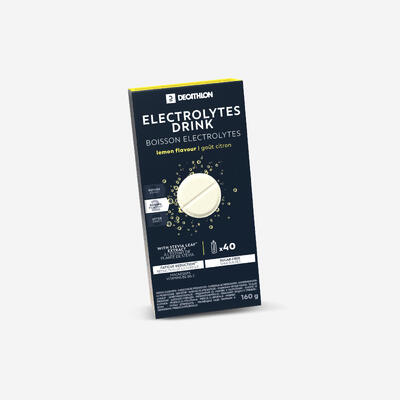
The beetroot protocol fits inside a complete hydration strategy. Nitrates promote vasodilation, which can increase sweat rate. Compensate with sugar-free electrolytes, especially if your event lasts more than an hour.
The antibacterial mouthwash trap
Here's a mistake a surprising number of runners make on race morning: rinsing with a chlorhexidine or antibacterial mouthwash. The conversion of nitrates to nitrites depends entirely on the commensal bacteria in your oral cavity. Without them, nitrates simply pass into the urine unchanged — the effect is cancelled. The Gomes et al. meta-analysis explicitly confirms that practices disrupting the oral microbiome significantly reduce the nitrate effect.
Practical rule: avoid all antibacterial mouthwash in the 24 hours before your target race. Normal brushing with regular toothpaste has no impact. And obviously, skip antibacterial chewing gum as well.
Stacking beetroot with caffeine: a winning combination
Caffeine and nitrates work through entirely different physiological pathways and complement each other well. Caffeine blocks adenosine receptors (reducing perceived fatigue and activating the central nervous system), while nitrates improve muscular contraction efficiency and tissue perfusion. No study has found a negative interaction between the two. The practical strategy: take your beetroot shot 2–3 h before the start, then your caffeine dose (3–6 mg/kg) 30–60 minutes before the gun. Caffeine gels during the event also do not cancel the beetroot effect.
Race-week protocol: the full schedule
For amateur athletes, a 3-to-7-day protocol is recommended to saturate plasma nitrite stores. Here is the schedule supported by the available data:
- D-7 to D-3: 1 shot (70 ml concentrate) per day, preferably in the morning or 2–3 h before your training session.
- D-2: 2 shots per day (morning + evening) — loading phase.
- D-1: 2 shots per day; final carb-loading meal in the evening — beetroot fits naturally into a pasta dinner.
- Race day: 1–2 shots 2–3 h before the start (based on your weight — see table above). No antibacterial mouthwash.
This schedule aligns with the recommendations of the 2026 review (Kubas et al.), which specifies that chronic loading of more than 8 mmol/day for 3–7 days maximises benefits — particularly for recreational athletes, in whom the effect is most pronounced.
What beetroot juice does not do (let's be honest)
A well-designed trial in 70 recreational runners found no significant difference between beetroot juice and placebo on competitive 5 km race time (Hurst et al., IJSNEM 2020). The lesson: beetroot is not a magic wand. The effect is real but modest, and context-dependent: effort duration (events > 12–15 minutes respond better), athlete level (amateurs > elites), and protocol compliance. In a 5 km, performance is often limited by factors (pacing, training quality) that overshadow the nitrate benefit. In a half-marathon, marathon, or long-distance triathlon, a cumulative 3–4% oxygen economy improvement sustained over several hours becomes genuinely meaningful.
Quick-reference checklist before you race with beetroot
- ✓ Dose: 6–8 mg nitrates/kg bodyweight (1–2 × 70 ml concentrated shots).
- ✓ Timing: 2–3 hours before the start (≥ 150 min).
- ✓ Chronic protocol: start 3–7 days before your target race for maximum effect.
- ✓ No antibacterial mouthwash in the 24 hours beforehand.
- ✓ Caffeine 30–60 min before the start: compatible and complementary.
- ✓ Stomach test: run the protocol in training before committing on race day.
- ✓ Powder form: verify that nitrates have not been denatured by heat processing.
Sources
Kubas W. et al. (2026). The impact of beetroot juice supplementation on performance in endurance sports. Quality in Sport. — https://doi.org/10.12775/qs.2026.54.69969
Tian C. et al. (2025). Effects of Beetroot Juice on Physical Performance in Professional Athletes and Healthy Individuals: An Umbrella Review. Nutrients. — https://doi.org/10.3390/nu17121958
Huang X. et al. (2022). Influence of Chronic Nitrate-Rich Beetroot Juice Supplementation on the Endurance Performance of Active Winter Triathletes. Journal of the American College of Nutrition. — https://doi.org/10.1080/07315724.2021.2021562
Gomes A. et al. (2022). Factors that Moderate the Effect of Nitrate Ingestion On Exercise Performance in Adults: A Systematic Review With Meta-Analyses and Meta-Regressions. Advances in Nutrition. — https://doi.org/10.1093/advances/nmac054
Hurst P. et al. (2020). No Differences Between Beetroot Juice and Placebo on Competitive 5-km Running Performance. International Journal of Sport Nutrition and Exercise Metabolism. — https://doi.org/10.1123/ijsnem.2020-0034
Coggan A.R. et al. (2024). Beetroot juice supplementation and exercise performance: is there more to the story than just nitrate? Frontiers in Nutrition. — https://doi.org/10.3389/fnut.2024.1347242