You’re targeting a 4-hour marathon — a pace of 5’40″/km. At that intensity, your body burns primarily muscle glycogen. Without well-timed carbohydrate fueling, the notorious “wall” between km 30 and km 35 is not inevitable — it’s simply the consequence of a poorly executed plan. To understand the full nutritional stakes from the very start of your race day, see this app for the race day nutrition plan. This guide gives you a complete marathon 4h fueling plan with gels, drinks, and exact timings.
Marathon 4h: How Many Carbs Do You Actually Need?
A runner targeting 4 hours burns on average 600–800 kcal per hour depending on body size and pace. The carbohydrate share represents approximately 60–70% of that expenditure. The golden rule in race nutrition: target 60g of carbs per hour after the first 15 minutes, and up to 90g/h if your gut is well trained and you use a glucose/fructose blend.
For a 4-hour marathon, that means roughly 3.5 to 4 hours of active fueling — between 200g and 360g of total carbohydrates depending on the intensity level you’re targeting. To contextualize these needs within your preparation week, see the marathon week meal plan, which details how to load glycogen stores before race day.
Note: the figures below are benchmarks, not gram-perfect prescriptions. Every runner is different. What matters is having a plan and having tested it.
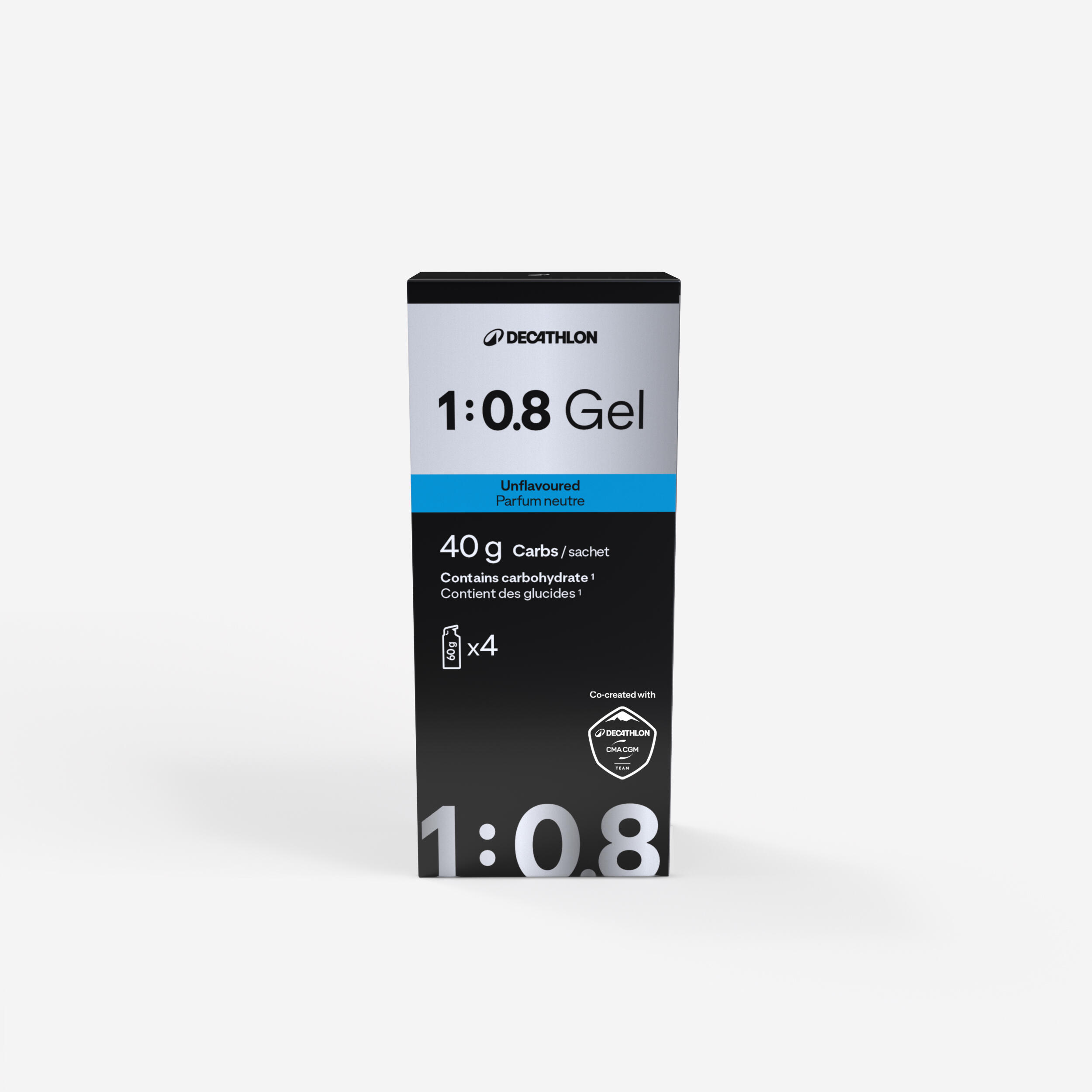
Plan A — Gels + Water: The Classic, Minute by Minute
This is the simplest plan to execute. You carry gels in your belt and rely on the course’s water stations. Here’s the timing for a 4-hour marathon:
- Start → km 5 (0–28 min): no gel, light hydration with water (a few sips every 20 min)
- Km 5 → km 10 (28–57 min): Gel #1 at 30 min. Swallow with at least 150–200 ml of water
- Km 10 → km 15 (57–85 min): Gel #2 at 60 min. Continue drinking water at aid stations
- Km 15 → km 20 (85–113 min): Gel #3 at 90 min. If you feel energy dips, move it slightly earlier
- Km 20 → km 25 (113–142 min): Gel #4 at 120 min. Mid-race — energy should remain stable
- Km 25 → km 30 (142–170 min): Gel #5 at 150 min. Approaching the tough stretch
- Km 30 → km 35 (170–198 min): Gel #6 at 170–175 min. This is where the wall can hit — don’t skip this gel
- Km 35 → km 40 (198–226 min): Optional Gel #7 at 200–205 min depending on tolerance. Many choose a caffeinated gel at this stage
- Km 40 → finish (226–240 min): Water only — you’re in your final window
Result: 6–7 gels over the race, one roughly every 30 minutes from km 5. The 30-minute interval is the ideal cadence for maintaining stable blood glucose without overloading your digestive system.
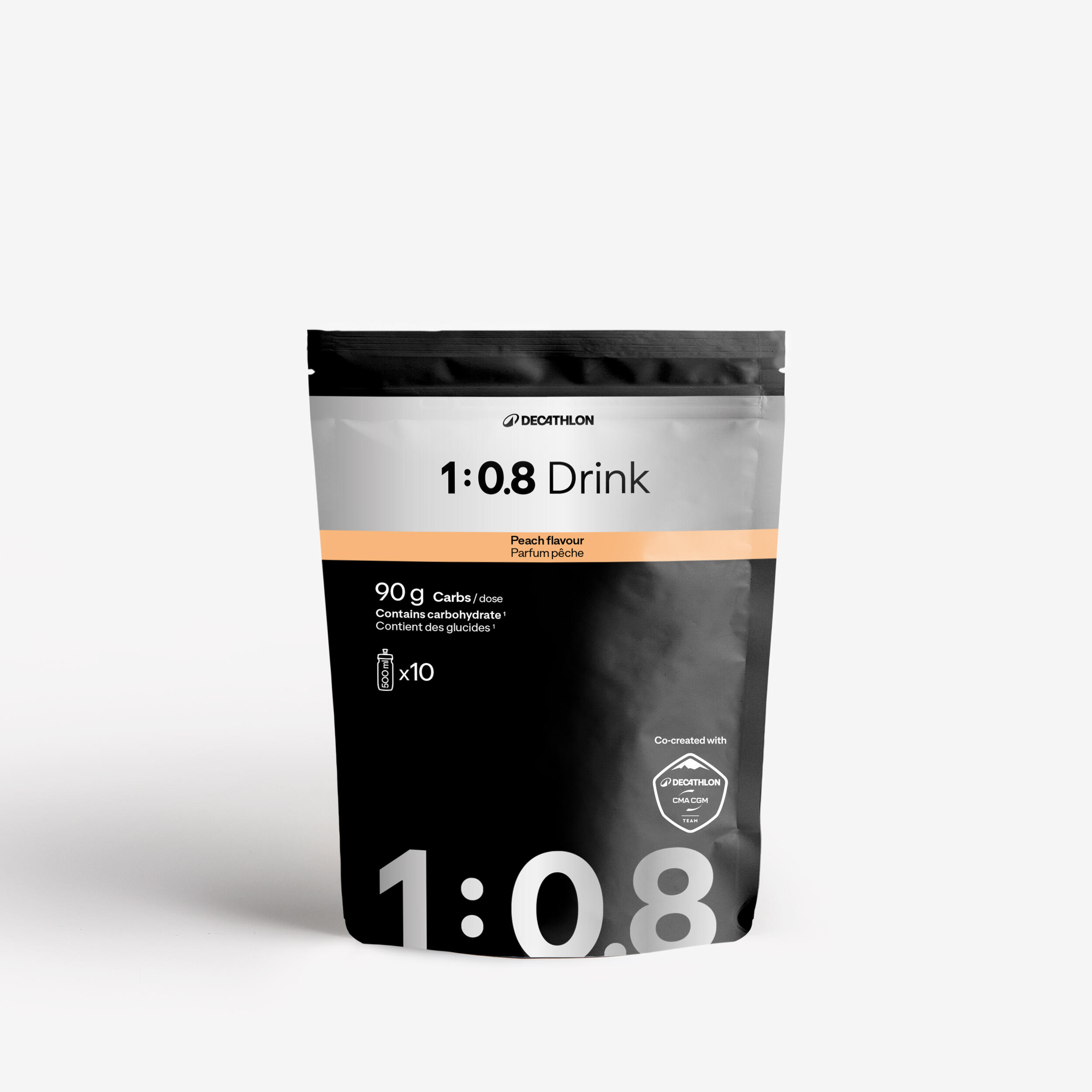
Plan B — Isotonic Drink + Gels: The Comfort Version
If you struggle to take gels on their own or your stomach is sensitive, mixing isotonic drink with gels reduces the carbohydrate concentration per intake. For everything related to your pre-race evening, see the article on the pre-race dinner for endurance — eating and sleeping well the night before is already part of your fueling strategy.
- Start → km 10: Isotonic drink at each aid station (approximately every 3–4 km depending on the course). Target: 20–30g of carbs in this window
- Km 10 (57 min): Gel #1 + water
- Km 15 → km 20: Isotonic drink at aid stations
- Km 20 (113 min): Gel #2 + water
- Km 25 → km 30: Isotonic drink at aid stations
- Km 30 (170 min): Gel #3 + water. Caffeinated gel recommended here
- Km 35 → finish: Water and/or isotonic drink depending on availability. Optional Gel #4 at 200 min if you still feel hungry
Advantage of this plan: carbohydrates arrive continuously in small doses, reducing digestive spikes. Drawback: you depend on isotonic drink availability on the course.
When Official Aid Stations Only Offer Water: How to Adapt
Many popular marathons provide isotonic drink at only a few points — or not at all. In that case, you run fully self-sufficient with all your gels and use only the official water stations to wash them down.
Practical rules:
- Load your belt with 6–8 gels before the start. That’s light (approximately 200–250g) and sufficient for 4 hours
- If the course offers a sponsored brand drink (e.g., Maurten, SiS, Powerbar), check in advance whether you tolerate it. Test nothing new on race day
- If you know the official aid station locations, time your gels 1–2 minutes before each water point so you can wash them down
- In hot weather, increase water intake between stations — gels concentrate carbs and can cause nausea if you’re dehydrated
The Most Common Mistakes at a 5’40″/km Pace
Running at 5’40″/km is a moderate but continuous pace over 4 hours. The metabolic stress is real and fueling mistakes are paid for heavily in the final 10 km. Here are the errors I see most often, and how to avoid them. If you have stomach issues with gels, that dedicated article covers the causes and solutions in detail.
- Waiting until you’re hungry to take a gel: hunger is a lagging signal. By the time you feel it, you’re already in deficit. Stick to your schedule
- Taking your first gel too early (before 20 min): pointless if you’ve eaten well before the race, and it can saturate your digestive system early
- Not drinking after the gel: a gel without water slows absorption and can irritate the stomach. Always rinse with at least 150 ml
- Mixing multiple gel brands on race day: sodium and fructose concentrations vary. If you trained your gut with one brand, stick with it
- Forgetting gels due to mental focus: set an alarm on your watch every 30 minutes from km 5
- Relying solely on official aid stations for carbs: official stations are often poorly timed to your needs. Run self-sufficient
Testing Your Plan in Training: The Rule of 3 Long Runs
A fueling plan isn’t tested on race day. It’s dialed in during your long runs in the 8–12 weeks before the race. For more on progressive gut adaptation, the article on gut training for 90g of carbs per hour explains how to ramp up without discomfort.
The rule of 3 long runs:
- Long run 1 (2h–2h15): test your base plan (1 gel every 30 min + water). Observe how your stomach responds
- Long run 2 (2h30–2h45): adjust timing if necessary. Try the caffeinated gel you plan for the end of the race
- Long run 3 (3h–3h15): repeat the final plan at marathon pace. This is a full dress rehearsal — race kit, planned gels, same drink if possible
What to observe after each run:
- Stable energy throughout or dips at certain points?
- Digestive discomfort (nausea, bloating, urgent needs)?
- Gel timing vs. aid station locations: too early, too late?
- Total carb intake: sufficient, or were you hungry toward the end?
If you hit energy dips despite the plan, consider slightly increasing frequency (every 25 min) or adding an isotonic drink alongside. If you experience discomfort, space them out further or try a brand with better personal tolerance.
Ograal Generates Your Minute-by-Minute Plan Based on Your Target Pace
Plans A and B above are solid foundations, but your marathon has its own constraints: body size, gut training level, course elevation, weather forecast, and personal gel tolerance. Ograal accounts for all of this and generates a personalized marathon 4h fueling plan, minute by minute, based on your target pace.
You enter your parameters (pace, body size, fueling preferences), and Ograal calculates the exact timings, appropriate product types, and adjustments based on the official aid stations of your race. Try it at ograal.app — free to start.
And if you want to refine your strategy across your entire preparation, start by looking at how I approach race day nutrition for endurance runners: the same principles apply whether you’re running 3h30 or 5h.