On 12 April 2026, Tadej Pogačar finished second at Paris-Roubaix, beaten in a two-up sprint by Wout van Aert after 5 hours 16 minutes of racing. A puncture 120 km from the finish, two bike changes, a long chase to get back on: “I had to change bikes twice and we spent a lot of energy chasing back,” he said after the race. In a race like that, nutrition is no detail. What does a rider like him eat in the week before and during the race, and above all, what can you take from it for your own long rides?
In short: pros prepare for a Classic like Paris-Roubaix with a 36 to 48-hour carb-load, a very carbohydrate-rich breakfast 3 hours before the start, and in-race intakes that can exceed 100 g of carbohydrate per hour. For an amateur, the right target is more modest: 60 to 90 g/h depending on duration and how well your gut is trained. What matters is the progression, not the pros’ number.
Paris-Roubaix: a race where energy is decided over the distance
More than 250 km, dozens of cobbled sectors, repeated accelerations and, often, mechanical incidents that force riders to chase. Every unplanned effort draws on glycogen stores. A rider who starts with full stores and fuels regularly keeps something in reserve for the final sectors. A rider who has eaten badly pays the price in the finale, whatever their level.
The week before: maintain, then load
Nutrition for a big Classic follows a simple logic that you can apply to your sportive or your main goal of the year:
- From D-7 to D-3: normal eating, adapted to training that’s easing off. Carbohydrate at every meal, enough protein to recover, no restriction.
- The final 36 to 48 hours: carb-loading. Scientific guidelines (Burke et al., 2011) put intake at 10 to 12 g of carbohydrate per kilo per day for efforts longer than 90 minutes. For a 70 kg rider, that’s 700 to 840 g of carbohydrate a day.
- The day before: less fibre and fat, easy-to-digest carbohydrate (rice, pasta, white bread, fruit purée), and good hydration: each gram of glycogen stored comes with about 3 g of water.
Race morning: breakfast
For the pros, breakfast before a Classic is a proper meal, eaten about 3 hours before the start and very rich in carbohydrate: rice, porridge, white bread with jam or honey, banana. For you, the logic is the same on a smaller scale: 1 to 2 g of carbohydrate per kilo, 2 to 3 hours before the start, low in fibre and fat, and only foods you’ve already tested.
During the race: from 60 to over 100 g of carbohydrate per hour
WorldTour riders now routinely aim for 90 to 120 g of carbohydrate per hour on the hardest stages and races, and some, Pogačar among them, sometimes go higher. These intakes rest on three pillars:
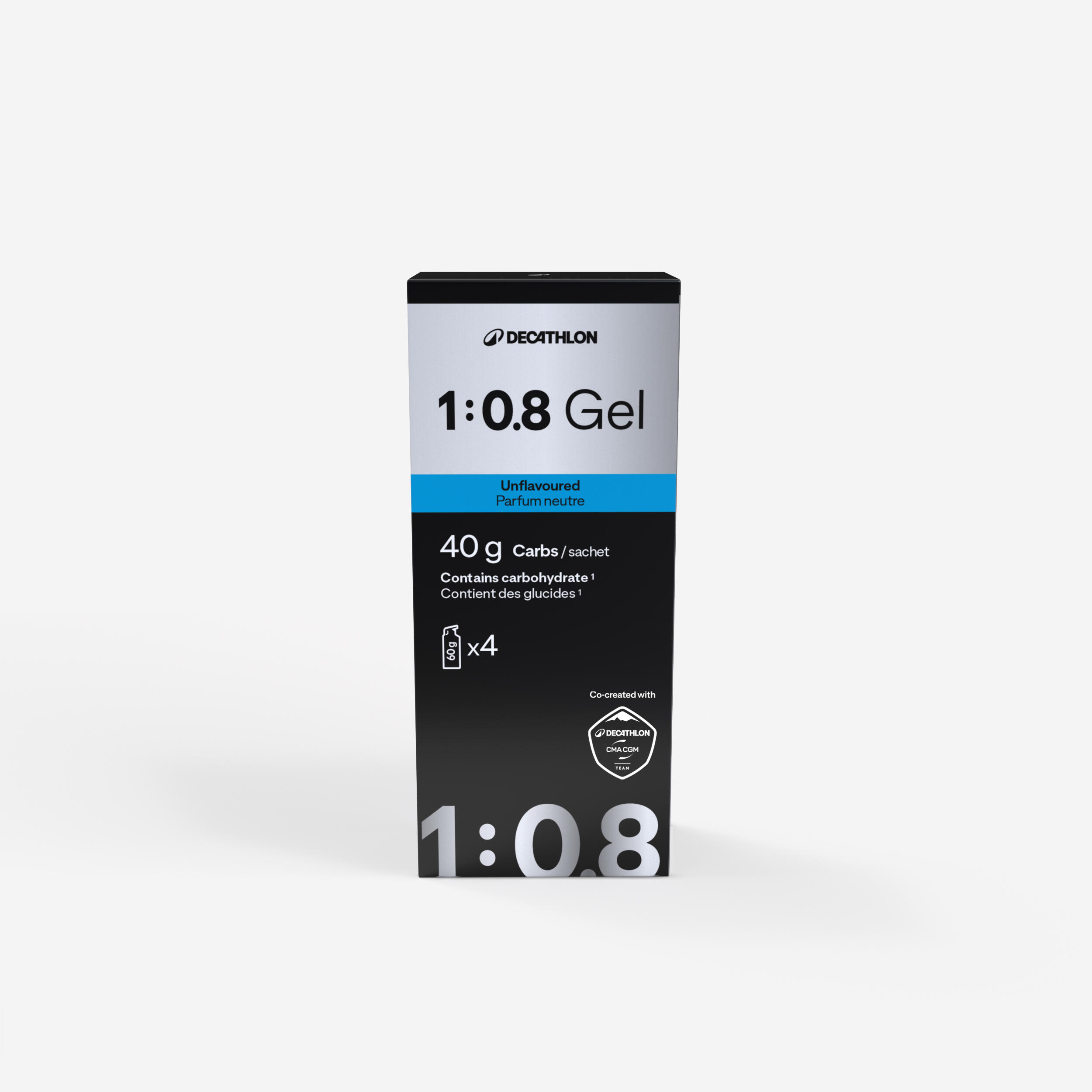
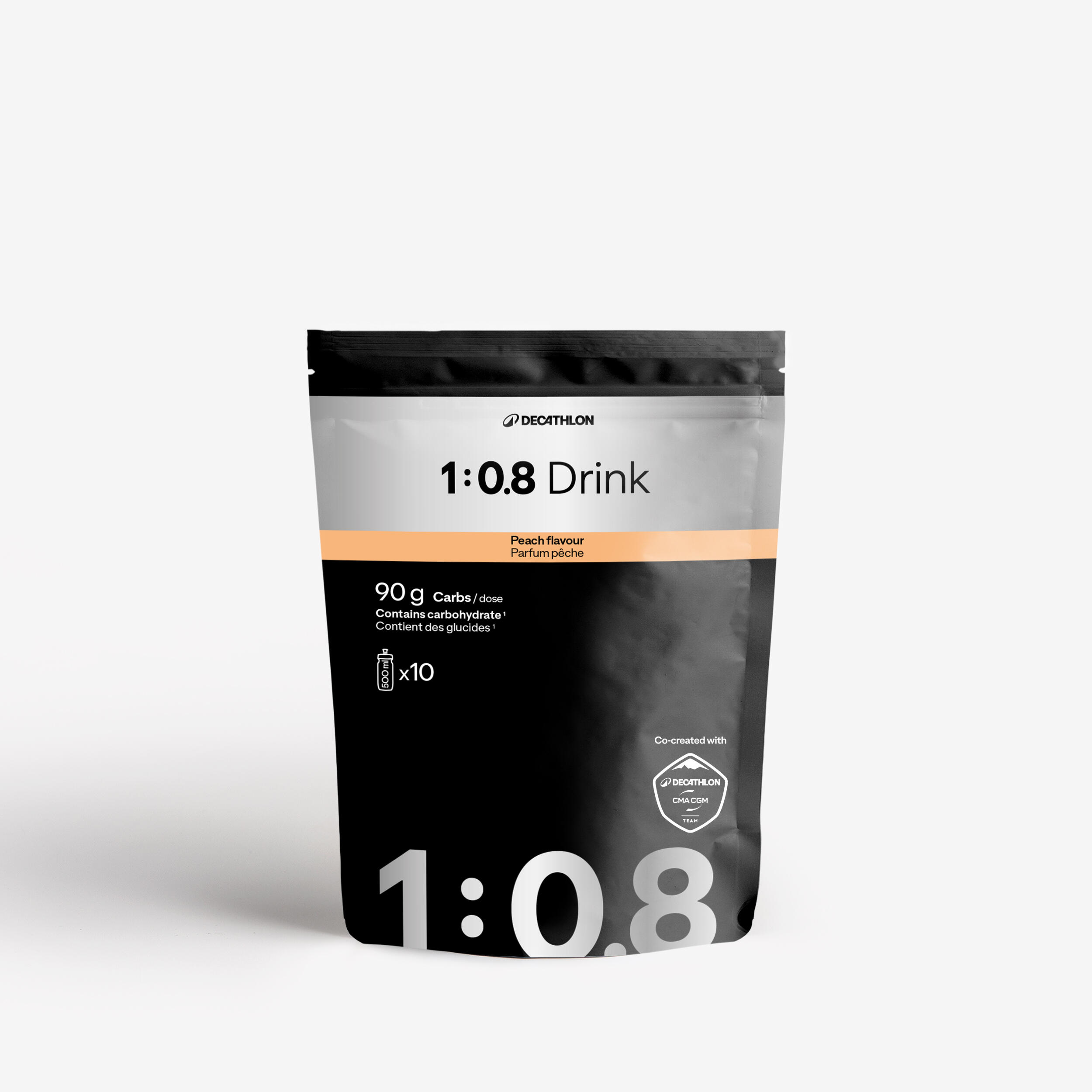
- products that combine glucose and fructose (2:1 or 1:0.8 ratio), to use two absorption routes;
- a gut trained for months to handle these amounts;
- meticulous organisation: prepared bottles, gels and bars at set times, team feeds.
Team nutritionists themselves add nuance: Gabriel Martins (Visma-Lease a Bike) points out that the answer is individual, and Tim Podlogar (Tudor) stresses that there’s no data showing 120 g/h does better than 90 g/h. For an amateur, going from 40-60 g/h to 80 or 90 g/h is already a huge step forward.
Going from 60 to 90 g/h: the progression that changes everything
Most amateur cyclists top out at 40 to 60 g/h, often simply out of habit. To build up without stomach problems:
- increase your intake in steps of 10 to 15 g/h every two weeks, on your long rides;
- above 60 g/h, use glucose + fructose products;
- split your intake every 20 to 30 minutes;
- test everything in training, at race intensity.
The full plan is in our guide Gut Training: 6-Week Plan to Tolerate 90 g/h.
Caffeine: a lever for the finale
Pros often use caffeine in the final part of races, as gels or in drinks. Studies put the effective dose at around 3 mg per kilo. For an amateur, the rule is simple: only use it in a race if you’ve tested it in training, and not if you’re sensitive to it.
After the effort: recovery isn’t improvised
Within an hour of finishing, combine carbohydrate and protein (recovery drink, chocolate milk, rice and eggs), rehydrate with a drink containing sodium, then have a proper meal. For the pros, recovery matters all the more because they race back to back; for you, it matters most if you’re training the next day.
What Pogačar does with a team of nutritionists, Ograal does for you
You don’t have a nutritionist in the team car, but the logic is the same: adapting your meals to your training every day. In Ograal, when you add your race to the calendar, the app switches on carb-loading for the days before, calculates your breakfast based on your start time, and your fueling per hour based on duration and intensity. For details, see How our plans are calculated.
Create your free Ograal account
Key takeaways
- A 36 to 48-hour carb-load before a race of more than 90 minutes.
- A carbohydrate-rich breakfast 2 to 3 hours before the start.
- 60 to 90 g of carbohydrate per hour for a trained amateur; the pros’ 120 g/h is not a target.
- Step-by-step progression and glucose + fructose products.
- Nothing new on race day.
Sources
- UAE Team Emirates-XRG (12 April 2026). Pogačar goes down fighting in breathtaking Paris-Roubaix.
- Velo (2026). Tour de France riders fuel at 120g carb. But should you?
- Burke, L. M., et al. (2011). Carbohydrates for training and competition. Journal of Sports Sciences, 29(Suppl 1), S17-S27. DOI: 10.1080/02640414.2011.585473
- Jeukendrup, A. (2014). A step towards personalized sports nutrition: carbohydrate intake during exercise. Sports Medicine, 44(Suppl 1), S25-S33. DOI: 10.1007/s40279-014-0148-z
- Thomas, D. T., Erdman, K. A., Burke, L. M. (2016). Nutrition and Athletic Performance. Medicine & Science in Sports & Exercise, 48(3), 543-568. DOI: 10.1249/MSS.0000000000000852