More and more marathon organisers are cutting back on, or doing away with, disposable cups. In their place: fountains you fill yourself, more widely spaced water points, and a simple instruction, “bring your own container”. For you, that changes everything: you need to choose your kit, know how much to drink and when, and fit your gels into this new approach. Here’s the complete method, from choosing a flask to your race plan.
In short: on a cup-free marathon, start with a 500 ml soft flask (or a collapsible cup if there are plenty of water points), aim for 400 to 800 ml of fluid per hour depending on the heat, and around 60 g of carbohydrate per hour by combining drink and gels. Train with your kit on your long runs, and rehearse a timed refill at least once before race day.
The end of cups: a constraint, but also an opportunity
Less waste, less jostling at the tables: getting rid of cups has real advantages. But it also removes the easy option of taking whatever you’re handed. Without a container, you drink less, or lose time at every stop. With your own kit, you drink when you want, as much as you want, and you can bring your own energy drink. It’s a chance to move from fueling on the fly to fueling with a plan.
Choosing your kit: collapsible cup, flask, belt or vest
| Kit | Volume | Best for |
|---|---|---|
| Collapsible cup | about 150 ml | courses with lots of water points, runners who want the bare minimum |
| 250 ml soft flask | 250 ml | closely spaced water points; empties fast in the heat |
| 500 ml soft flask | 500 ml | the most common choice: 30 to 45 minutes between refills |
| Flask belt | 1 or 2 flasks | to carry your gels too, without holding them |
| Hydration vest | 500 ml to 1.5 L | very hot weather, heavy sweaters, conservative pace |
For most runners, a 500 ml soft flask held in the hand or slipped into a belt is the best compromise. It fills in a few seconds at a fountain and folds away once empty.
Drinking strategy: how much, when, what?
Fluid needs vary a lot with the heat, your size and how much you sweat. The reference guidelines (Sawka et al., 2007) give a range of 400 to 800 ml per hour:
- Cool weather (below 15 °C): around 400 ml per hour.
- Mild weather (15 to 25 °C): 500 to 600 ml per hour.
- Hot weather (above 25 °C): 700 to 800 ml per hour.
In practice, drink 150 to 200 ml every 15 to 20 minutes, in small sips. There’s no need to empty your flask in one go at each water point.
On timing:
- The day before and on the morning: drink to thirst, then stop 45 to 60 minutes before the start to avoid a toilet stop.
- First half: drink regularly, even if you’re not thirsty, in small amounts.
- Second half: favour your energy drink, which provides carbohydrate and sodium.
- Final kilometres: drink according to how you feel.
Watch out for drinking too much. Drinking far more than you lose, especially plain water, can make the sodium level in your blood drop (hyponatraemia). It’s rare but dangerous, and mostly affects slower runners who drink at every water point. Never force it: if you gain weight during the race, you’re drinking too much. In hot weather, choose a drink that contains sodium (about 500 to 700 mg per litre) or add an electrolyte tablet to your flask.
Combining flask and gels: your race plan
For a marathon, the carbohydrate target is about 60 g per hour. A study of runners at the Seville marathon (Jiménez-Alfageme et al., 2025) shows that most runners take far less, around 35 g/h, and that those who reach 60 to 90 g/h are more likely to finish under 3 hours. Beyond 2:30 of effort, trained runners can go up to 90 g/h with products combining glucose and fructose, provided their gut is used to it.
A simple plan to reach 60 g/h:
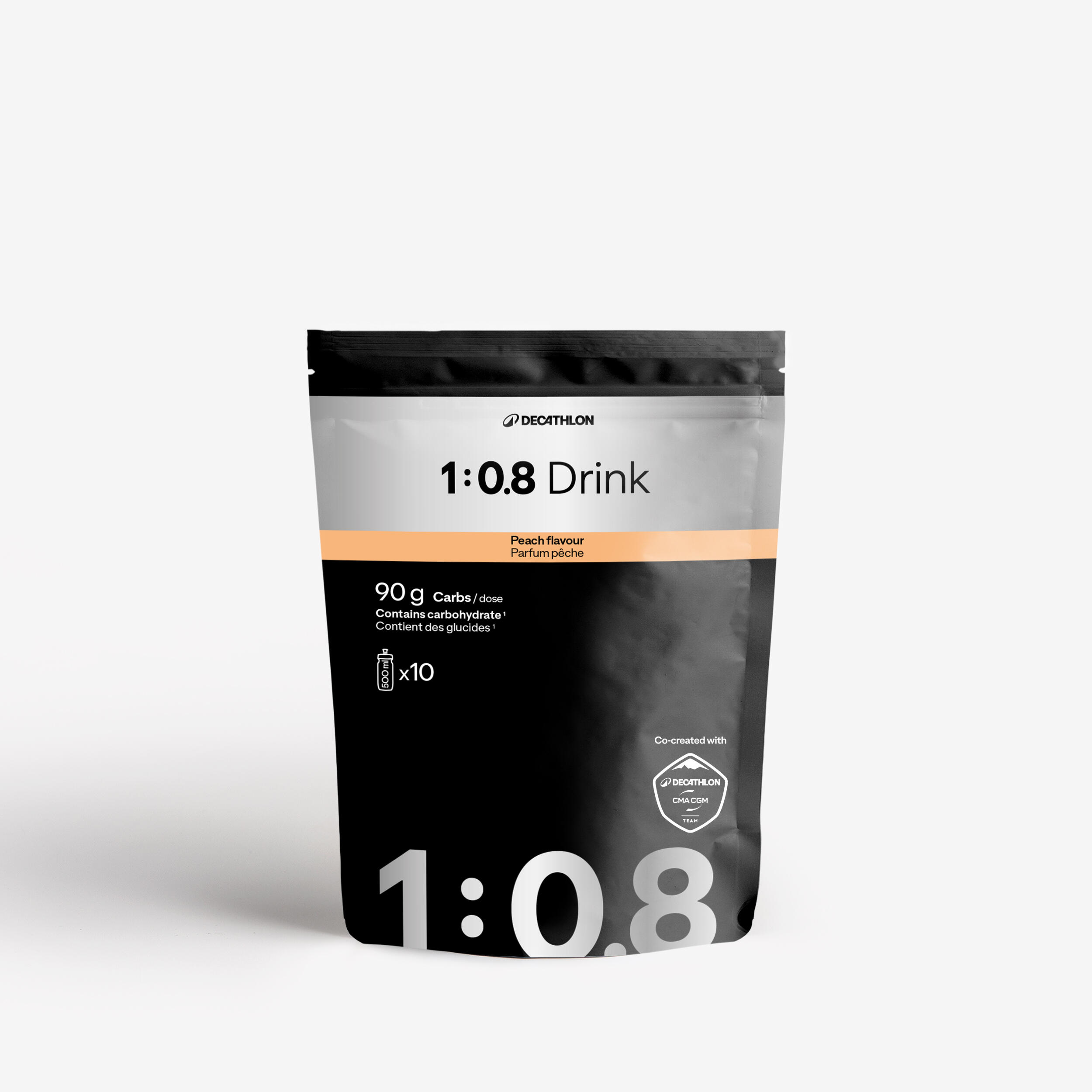
- a 500 ml flask of energy drink containing 30 to 40 g of carbohydrate, drunk over one hour;
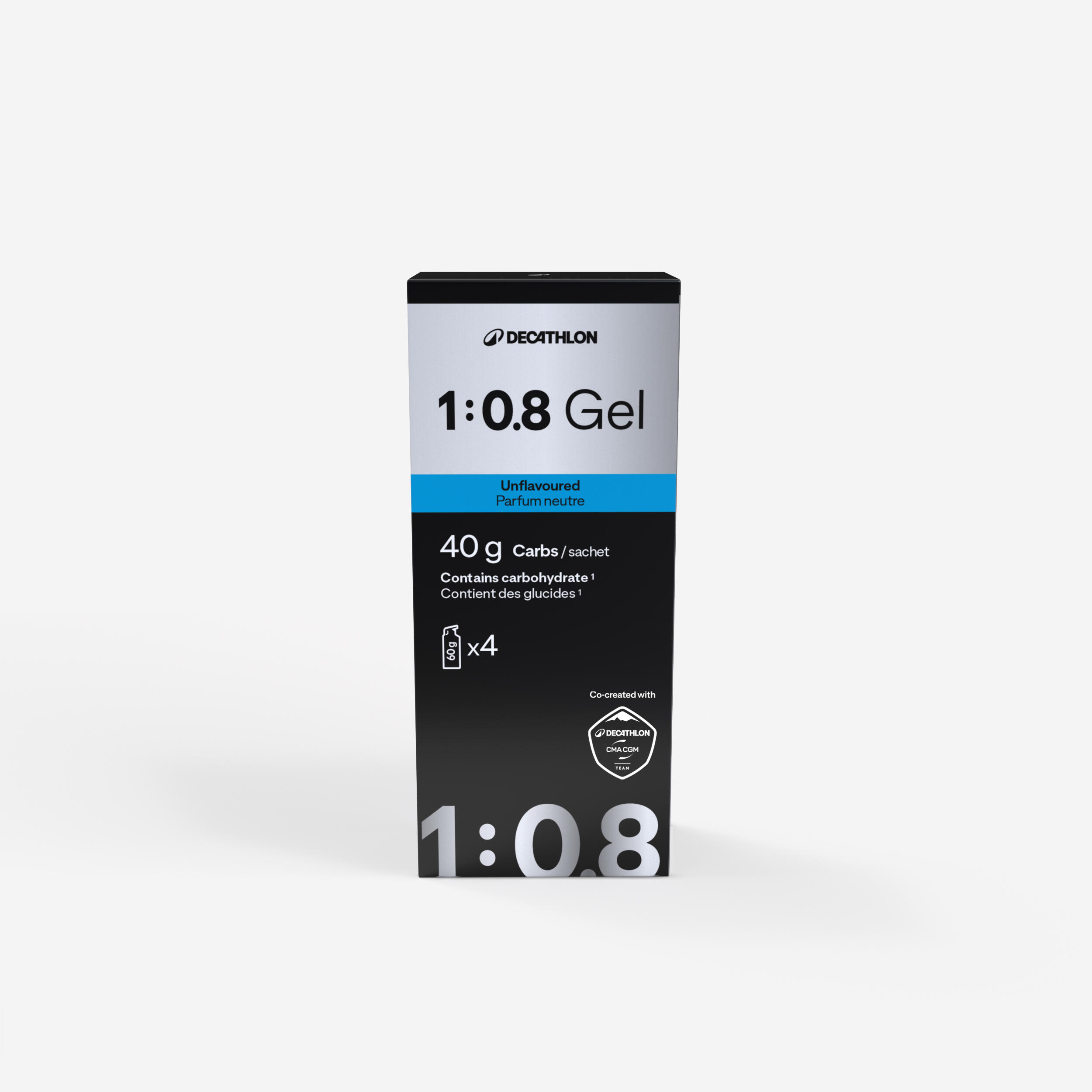
- a 20 to 25 g gel every 30 to 40 minutes, starting from minute 30 to 45;
- water from the fountains to refill your flask and wash down your gels.
Time your intakes by race time, not by kilometres: your start time and pace decide everything. The fruit offered at some points (banana, orange) is a top-up, not the base: take small portions, and only if you’ve tested them.
Ograal plans your drink and gel fueling
In Ograal, when you add your marathon to the calendar as a race, with its duration and your start time, the app calculates your carbohydrate per hour, fluid volume, number of gels and intake rhythm. If you’ve saved your own products, the plan is calculated with them. In the days before, carb-loading switches on automatically. For details, see How our plans are calculated.
Training with your flask: the 6-week protocol
Running 42 km with a flask you’ve never carried is the best way to get a blister on your hand or drop it at km 10. Get ready:
- 6 weeks out: do your long run with your race-day kit and start fueling according to your plan.
- 4 weeks out: simulate a water-point stop. Time how long it takes to refill your flask and get back to pace.
- 2 weeks out: do a dress rehearsal over 28 to 32 km, with exactly the drink, gels and set-up planned for the race.
All your runs over 25 km should be done with your race kit and fueling. That’s also when your gut learns to tolerate carbohydrate on the move.
Pre-race checklist
- Flask or cup tested in training, clean and filled.
- Energy drink mixed at the right concentration.
- Gels counted according to your plan, plus one spare.
- An electrolyte tablet if the forecast is hot.
- Water points located on the course map.
- Intake plan written down (on your hand, your bib or your watch).
Key takeaways
- A 500 ml soft flask is the best compromise for most runners.
- 400 to 800 ml per hour depending on the heat, without ever forcing it.
- About 60 g of carbohydrate per hour, combining drink and gels.
- Sodium in your drink in hot weather.
- All kit and products tested on long runs.
Create your free Ograal account
Sources
- Sawka, M. N., et al. (2007). American College of Sports Medicine position stand. Exercise and fluid replacement. Medicine & Science in Sports & Exercise, 39(2), 377-390. DOI: 10.1249/mss.0b013e31802ca597
- Casa, D. J., et al. (2000). National Athletic Trainers’ Association position statement: fluid replacement for athletes. Journal of Athletic Training, 35(2), 212-224.
- Jiménez-Alfageme, R., et al. (2025). Nutritional Intake and Timing of Marathon Runners: Influence of Athlete’s Characteristics and Fueling Practices on Finishing Time. Sports Medicine – Open, 11, 26. DOI: 10.1186/s40798-024-00801-w
- Noakes, T. D. (2012). Waterlogged: The Serious Problem of Overhydration in Endurance Sports. Human Kinetics.