Gels or Energy Drink: The Right Choice for Your Marathon
You hit kilometre 30 and the thought of swallowing another gel makes your stomach turn. Or maybe the sports drink at the aid station is too sweet, too diluted, and nothing like what you trained with. These moments define marathons — and they often come down to one decision made weeks before race day: gels or energy drink? This article walks you through the science, the trade-offs, and a practical decision matrix so you can pick the right fuel format for your profile.
Why the Format of Your Fueling Matters as Much as the Amount
Ograal builds a fully personalized race-day fueling plan — gel, drink, solid food — based on your target duration, expected pace, and digestive history. Try Ograal for free to get your plan dialed in before race day.
Physiologically, the format debate goes straight to intestinal transporters. Jeukendrup (2017) demonstrated that to sustain carbohydrate uptake beyond 60 g/h, you need to combine two sugar types — glucose and fructose — to saturate both SGLT1 and GLUT5 simultaneously. This applies regardless of format: gel, isotonic drink, or a mix. What matters most is composition and intake consistency, not the container.
That said, format directly affects how easily you maintain that regular intake during a race. A concentrated gel (25 g of carbs in 40 ml) demands supplemental water to dilute it in the gut. An isotonic drink delivers carbs and hydration in one go but ties you to whatever the official aid stations provide.
Energy Gels: Strengths and Weaknesses
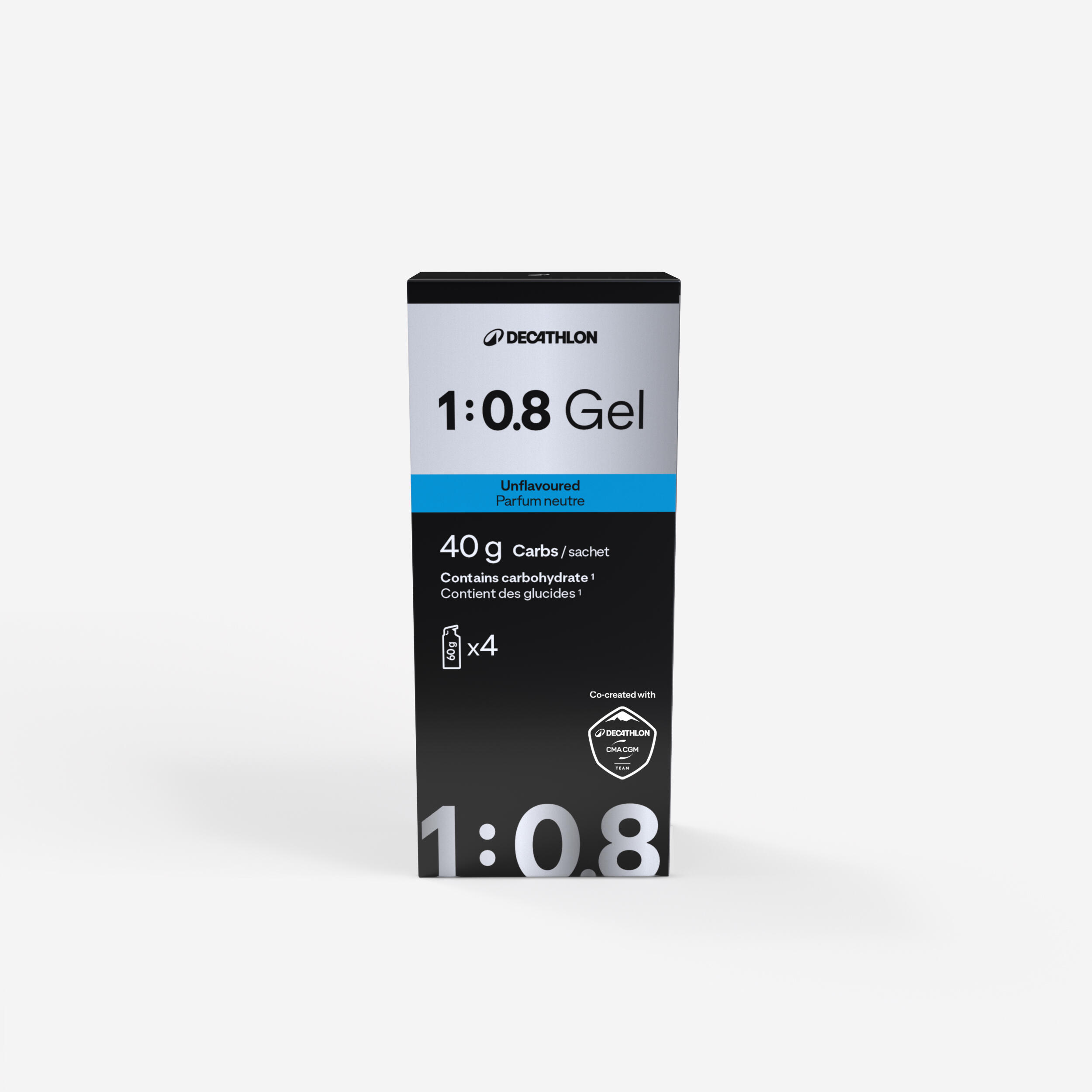
Gels dominate performance racing for good reasons. They are compact, precisely dosed, and easy to carry in a race belt or short pocket. Here’s the full picture:
High carb density: 20–25 g of carbohydrates in under 40 g of product. Ideal for keeping carried weight low on sub-4h marathons.
Timing independence: you control when you fuel, regardless of where the aid stations are placed — a real advantage on crowded courses.
Water is non-negotiable: a gel taken without water stays hyperosmolar in the stomach and slows gastric emptying, a classic trigger for nausea after kilometre 30.
Flavour fatigue: after three or four gels, the sweetness and thick texture can become repulsive, especially when mental fatigue sets in during the final miles.
Overdose risk: stomach issues from gels during a marathon most often occur when gels are taken too close together without enough water to support digestion.
Energy Drinks: Strengths and Weaknesses
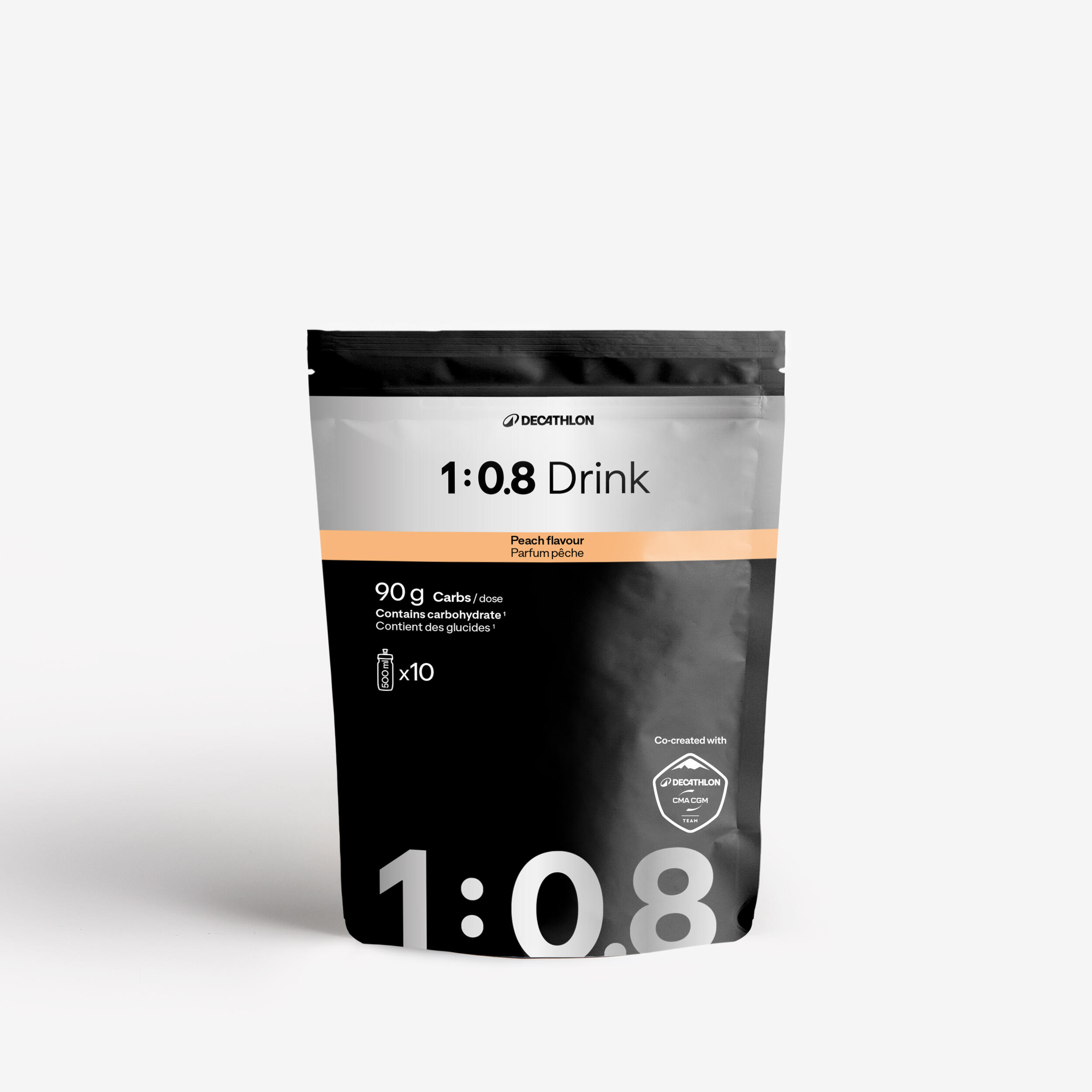
Isotonic or carbohydrate drinks combine hydration and energy into one format. They are particularly well-suited for efforts lasting longer than 4h30, or for runners who struggle to digest concentrated solid or gel formats.
Controlled osmolarity: a well-formulated drink (isotonic, ~6–8% carbs) respects intestinal absorption physiology and reduces the risk of cramps or diarrhea.
Easier to ingest at pace: drinking is less disruptive than chewing or swallowing a thick gel when intensity is high. The habit is easier to sustain automatically.
Aid station dependency: on a marathon, you cannot control which brand or concentration is on offer. If the official drink is too sweet or too diluted, your carb management becomes unpredictable.
Carry volume: you cannot start with several hours of drink on you without a soft flask or hydration vest. Without one, you are fully dependent on the race’s aid station layout.
Over-drinking risk: drinking at every table without a plan can lead to hyponatremia, especially if the drink has low sodium content.
What the Science Says About GI Distress
The format comparison is not just about preference. McCubbin et al. (2022, Frontiers in Physiology) documented that gastrointestinal symptoms increase significantly when carbohydrate intake exceeds 90 g/h — but also showed that format influences tolerance. In their analysis, 90 g/h from drink generated more gastric complaints than the same intake via gel with water, likely due to the total liquid volume consumed.
Additionally, Cao et al. (2025, Nutrients) confirm that sodium in the drink enhances glucose absorption via the SGLT1 cotransporter, and that caffeine (present in some gels) potentiates muscular carbohydrate uptake. Both sodium and caffeine are more easily fine-tuned with individual gels than with a single continuous drink source.
The practical takeaway: neither gels nor drinks win outright. A well-planned combination of both is what allows runners to reach optimal intake targets while minimising digestive risk. If you want to train your gut to absorb 90 g of carbs per hour, a progressive multi-week protocol remains essential.
Comparison Table: Gels vs Energy Drink
Decision Matrix by Runner Profile
Use this grid across three axes: digestive profile, race intensity, and logistical constraints.
Solid gut + marathon under 4h + standard aid station circuit→ Gels + water at official tables. High carb density with minimal carry weight. Take a gel every 30–35 minutes, always rinse with water. See our marathon sub-4h fueling plan with gels for a full breakdown.
Sensitive digestion + marathon between 4h and 5h→ Isotonic drink at every aid station + 1 gel mid-race if needed. The drink limits osmotic spikes. A single mid-race gel provides an energy boost if you feel a dip around kilometre 30.
Ultra or marathon over 5h→ Drink as the base + soft solids (fruit pouch, banana) + caffeine gel in the final stretch. The effort duration is too long to rely on gels alone. Format variety keeps sensory appeal alive across many hours.
First marathon, digestive uncertainty→ Mandatory training-run testing. Never discover a fuel format on race day. Start with isotonic drink, add one gel on your 30 km long run, and observe your digestive response before committing to a plan.
The Most Common Fueling Mistakes
Taking a gel without water. The single most common error. A dry gel stays hyperosmolar in the stomach, slows emptying, and often triggers nausea two or three gels later. Always chase with 150–200 ml of water.
Stacking gel + sugary drink at every table. If you take a gel at every aid station and also drink the official carbohydrate drink, you risk exceeding your gut’s absorption threshold — especially without prior gut training at 90 g/h.
Waiting until you feel hungry to fuel. Hunger during a race is always a lagging indicator — by the time you feel it, glycogen is already depleted. Fueling must be preventive, regular, and starting within the first third of the race.
Switching brands on race day. Glucose-to-fructose ratios, osmolarity, and excipients differ across brands. A gel you have never tested can trigger an unexpected digestive reaction at kilometre 35.
Ignoring sodium. Whether you choose gels or drinks, make sure you are getting sodium — especially if you sweat heavily or temperatures are high. Sodium enhances glucose absorption (Cao et al., 2025) and guards against hyponatremia.
Build Your Plan Before Race Day
The best fueling format is the one you have tested in training, under conditions as close as possible to your race. Ograal helps you build that plan step by step: duration, target pace, preferred format, digestive profile, and aid station layout. Get started with Ograal for free — and arrive at the start line with a plan, not a guess.
Sources
Jeukendrup, A. (2017). Training the Gut for Athletes. Sports Medicine. DOI: 10.1007/s40279-017-0690-6
Cao et al. (2025). A Review of Carbohydrate Supplementation Approaches for Optimizing Performance in Elite Long-Distance Endurance. Nutrients. DOI: 10.3390/nu17050918
McCubbin et al. (2022). Feeding Tolerance, Glucose Availability and Exercise Performance. Frontiers in Physiology. DOI: 10.3389/fphys.2021.773054