Up to 90% of ultra-trail runners report gastrointestinal distress during competition in heat above 30°C, according to a 2023 systematic review (Dietetics, DOI: 10.3390/dietetics2030021). Kilian Jornet — four-time UTMB winner and confirmed starter at Chamonix on August 28, 2026 — has built a large part of his longevity on the ability to fuel effectively in extreme conditions, from scorching editions of Hardrock 100 to Zegama-Aizkorri. Heat isn’t just a cooling problem: it fundamentally reshapes how your gut accepts — or rejects — the carbohydrates you’re trying to run on.
Definition: Exertional heat stress digestive syndrome refers to the set of gastrointestinal functional disruptions caused by the combination of ambient heat and sustained endurance exercise. From 28–30°C onward, reduced splanchnic blood flow leads to increased intestinal permeability, delayed gastric emptying, and impaired carbohydrate absorption — proportional to the rise in core body temperature (Mika et al., 2023, Temperature, DOI: 10.1080/23328940.2023.2213625).
Ograal factors race temperature into your nutrition plan through the Start Time — Adapted Nutrition feature: enter your forecast weather and the app automatically adjusts your hourly carbohydrate targets, intake frequency, and recommended gel concentration. Build your heat fueling plan on Ograal — free access.
Key Takeaways
- Above 30°C, digestive distress affects up to 90% of ultra-trail runners in competition.
- Core body temperature predicts the severity of exercise-induced GI syndrome (Mika et al., 2023).
- Reducing gel carbohydrate concentration from 8% to 4–5% improves gastric emptying in heat (Vist & Maughan, 1995).
- Kilian Jornet (UTMB 2026, August 28) adapts his fueling strategy to the thermal profile of each race.
- A hydrogel format at 20g carbohydrate/67ml reduces gastric osmolarity and limits reflux under heat stress.
Why Does Heat Sabotage Carbohydrate Absorption During Trail Running?
When you run at 30°C, your body redirects blood flow to the skin to dissipate heat — at the expense of your digestive system. This splanchnic vasoconstriction reduces intestinal blood flow by 60 to 80% during intense effort in hot conditions (Costa et al., 2020, Temperature, DOI: 10.1080/23328940.2019.1597676). The direct consequence: the intestinal mucosa is under-oxygenated, tight junctions between enterocytes weaken, and the gut wall becomes permeable to bacterial endotoxins.
A recent study on eleven triathletes (Beiter et al., 2025, Physiological Reports, DOI: 10.14814/phy2.70305) demonstrated that running at 28–30°C versus 18–21°C significantly elevated markers of epithelial injury (I-FABP) and transcellular intestinal permeability. The correlation coefficient between peak core temperature and I-FABP was r = 0.554: the more you overheat, the more your gut is damaged.
Heat also slows gastric emptying. Vist and Maughan (1995, Journal of Physiology, DOI: 10.1113/jphysiol.1995.sp020831) showed that the concentration and osmolarity of ingested solutions directly affects the rate of gastric emptying: a hyperosmolar solution (concentrated gel at 8% or above) stagnates in the stomach, causing nausea and reflux. In heat, this effect is amplified because thermal stress independently inhibits gastric motility. The practical result: the gel you take at kilometer 30 doesn’t move, your stomach bloats, and nausea arrives before any real hypoglycemia.
3 Mechanisms of Heat Stress That Change Your Fueling Approach
1. Delayed gastric emptying: From 28°C onward, gastric emptying rate can drop by 20–30% compared to temperate conditions (Sumi et al., 2023, Nutrients, DOI: 10.3390/nu15010216). In practice, your gels accumulate rather than transit, creating that persistent full-stomach sensation.
2. Increased intestinal permeability: Thermal “leaky gut” allows bacterial lipopolysaccharides (LPS) into the bloodstream. The resulting systemic inflammatory response produces nausea, central fatigue, and sometimes fever — symptoms often mistaken for heat exhaustion.
3. Hydration-carbohydrate competition: A systematic review on ultra-trail races (Viribay et al., 2021, Int. J. Environ. Res. Public Health, DOI: 10.3390/ijerph18115737) found that 65 to 82% of runners experienced digestive problems, particularly when concentrated solid foods and gels coincided with even mild dehydration. In the heat, physiological priority shifts to water — carbohydrate delivery becomes secondary for the stomach.
Fueling Plan by Temperature Threshold: From 20°C to 30°C+
The table below translates scientific recommendations into concrete actions by temperature and trail duration. It draws on heat nutrition protocols described by Ribichini et al. (2023, Dietetics) and Costa et al. (2020).
| Temperature | 2h Trail | 4h Trail | 6h+ Trail |
|---|---|---|---|
| 20°C | 60g CHO/h, standard gel 25–30g, 500mL water/h | 60–70g CHO/h, 1 gel + 1 bar/h, 500–700mL/h | 60–75g CHO/h, mixed carbs (maltodextrin + fructose), 700mL/h + 500mg sodium/h |
| 25°C | 50–55g CHO/h, gels ≤22g/unit, 600mL water/h | 50–60g CHO/h, hydrogel or diluted gel, 700mL/h, 500–700mg sodium/h | 45–55g CHO/h, avoid dry bars, dose every 20 min, 800mL/h + electrolytes |
| 30°C+ | 40–45g CHO/h, 1 hydrogel/45 min, 700mL/h | 40–50g CHO/h, hydrogel format only, 800–900mL/h, 700–1000mg sodium/h | 30–45g CHO/h, dose every 20–25 min (half-gel), 1L/h, 1000mg sodium/h, caffeine with gel |
Sources: Costa et al. 2020; Ribichini et al. 2023; Viribay et al. 2021; Vist & Maughan 1995.
Decathlon HYDROGEL: The Heat-Designed Gel Formula
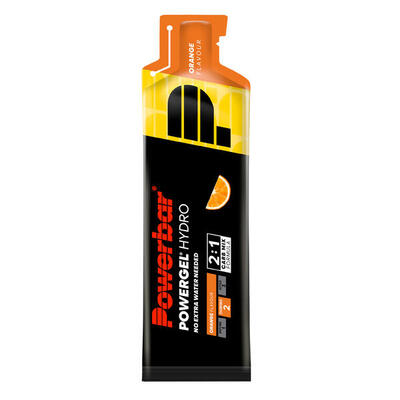
For summer trails above 25°C, reducing osmotic load is the key. Decathlon’s orange HYDROGEL gel directly addresses this with its water-based formula.
How Elite Trail Runners Like Kilian Jornet Manage Fueling in Extreme Heat
Kilian Jornet (38 years old, UTMB winner 2008, 2009, 2011, 2022; confirmed at Chamonix on August 28, 2026 after a three-year absence) has raced some of the hottest editions of UTMB, Hardrock 100 (Colorado), and Zegama-Aizkorri. On these events, heat fueling management is as much a competitive edge as a safety requirement. Without inventing quotes, his publicly documented preparation shows patterns consistent with the scientific literature: frequent small doses (every 20 min rather than every 45 min), preference for liquid and hydrogel formats in warm conditions, and systematic sodium hydration before the onset of thirst.
These adaptations align precisely with what Costa et al. (2020) recommend to prevent exertional heat stress GI syndrome: reduce osmolar load per intake, increase administration frequency, and prioritize sodium. In the summer 2026 calendar, two events perfectly illustrate these stakes: the Ultra-Trail Côte d’Azur Mercantour (July 3–5, Saint-Martin-Vésubie, with temperatures potentially exceeding 30°C at lower altitudes) and the Ultra-Trail du Beaufortain (July 18–19, starting at 4am but with valley heat building mid-race). On both courses, concentrated solid foods become problematic in the second half — that’s where splitting into small hydrogels makes a concrete difference. For further reading on carbohydrate strategies in heat, see our article on trail running summer heat fueling strategy.
Conclusion: Adapt Your Fueling from 25°C — Not Just at 35°C
The classic summer trail mistake: waiting for nausea before changing your strategy. From 25°C onward, exertional heat stress begins reducing tolerance to concentrated gels. The practical rule: stay below 22g of carbohydrate per dose, increase frequency to every 20–25 minutes, and choose hydrogel formats that don’t require additional water to digest. At 30°C+, targeting 40–50g/h with a functioning gut beats trying to force 60–70g/h with a blocked stomach. Use Ograal to generate your personalized race nutrition plan based on your forecast conditions — free.
Frequently Asked Questions
Why do energy gels cause stomach problems in hot weather?
Heat reduces splanchnic blood flow by 60 to 80%, slowing gastric emptying and increasing intestinal permeability. A concentrated gel (over 25g carbohydrate, high osmolarity) stagnates in the stomach, triggering nausea and reflux. Above 28–30°C, opt for hydrogels (≤22g/unit) taken every 20–25 minutes (Costa et al., 2020; Beiter et al., 2025).
How many carbohydrates per hour can you absorb during a trail run at 30°C+?
Scientific evidence suggests targeting 40–50g of carbohydrate per hour (versus 60–75g in cooler conditions). Beyond this threshold, digestive problem risk rises sharply, especially with mild dehydration. Splitting into 15–20g doses every 20 minutes substantially improves tolerance (Viribay et al., 2021, DOI: 10.3390/ijerph18115737).
Should you hydrate differently during a trail run in high heat?
Yes. Above 28°C, target 800–1000mL per hour (versus 500–700mL in cooler conditions), with 500–1000mg sodium/hour to maintain electrolyte balance. Even mild dehydration of 2% body weight worsens thermal digestive stress: it elevates core temperature and accelerates “leaky gut” progression (Sumi et al., 2023).
Does a 2-hour trail run need the same heat adaptations as an ultra?
Not exactly. For 2 hours, the priority is hydration and reducing gel concentration. For 4 hours and longer, add mandatory dose splitting (every 20–25 min), sodium supplementation, and liquid or hydrogel formats. The cumulative impact of heat stress on the gut increases with exercise duration — what the gut tolerates in the first two hours may become intolerable at hour four.
Sources
- Costa, R. et al. (2020). Exertional-heat stress-associated gastrointestinal perturbations during Olympic sports. Temperature. DOI: 10.1080/23328940.2019.1597676
- Mika, A. et al. (2023). The increase in core body temperature in response to exertional-heat stress can predict exercise-induced gastrointestinal syndrome. Temperature. DOI: 10.1080/23328940.2023.2213625
- Beiter, T. et al. (2025). Impact of moderate environmental heat stress during running exercise on circulating markers of gastrointestinal integrity in endurance athletes. Physiological Reports. DOI: 10.14814/phy2.70305
- Ribichini, E. et al. (2023). Exercise-Induced Gastrointestinal Symptoms in Endurance Sports. Dietetics. DOI: 10.3390/dietetics2030021
- Sumi, D. et al. (2023). The Impact of Heat Acclimation on Gastrointestinal Function following Endurance Exercise in a Hot Environment. Nutrients. DOI: 10.3390/nu15010216
- Viribay, A. et al. (2021). Relationship of Carbohydrate Intake during a Single-Stage One-Day Ultra-Trail Race with Fatigue Outcomes and Gastrointestinal Problems. Int. J. Environ. Res. Public Health. DOI: 10.3390/ijerph18115737
- Vist, G. & Maughan, R. (1995). The effect of osmolality and carbohydrate content on the rate of gastric emptying of liquids in man. Journal of Physiology. DOI: 10.1113/jphysiol.1995.sp020831